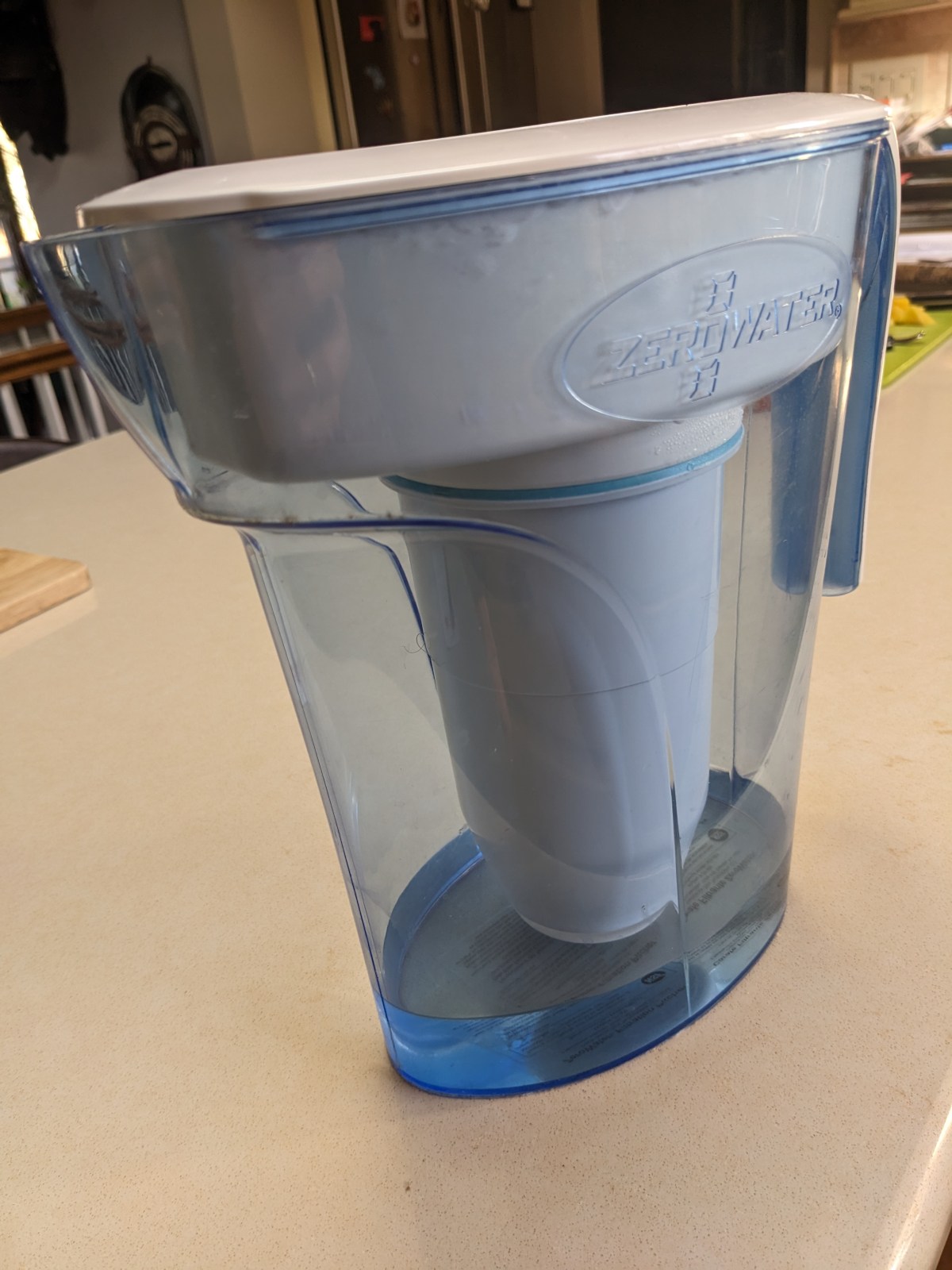
I fill two glasses of tap water for our supper. It looks pristine. It tastes okay. I pour it into a kettle for tea or coffee several times a day. I fill a bottle with it when we’re traveling. I use it for cooking, and in humidifiers. I hear stories on the news at night about communities worldwide where no running water is available, and I count my blessings. As I should.
And yet … as a member of the Rockland Sierra Club, I begin to receive emails about PFAS, including their presence in the water we in Upper Nyack receive from the Suez Water Company. I read that New York State has established new standards for the amount of PFAS allowed in water in New York State. I receive a letter from Suez telling me that they have not achieved these standards, but are working on the problem. I am assured by them that the level of PFAS in my water is safe, not a threat to my health. I receive an email from the Rockland Sierra Club telling me it’s not clear that ANY level of PFAS is safe.
What are PFAS anyway? According to Riverkeeper, PFAS refers to “per-and poly-fluoroalkyl substances. This is a class of chemicals that includes thousands of individual chemicals”, including PFOA (Perfluorooctanoic acid acid) and PFOS (Perfluorooctanesulfonic acid).( https://www.riverkeeper.org/wp-content/uploads/2021/01/Public-Report-2019-Rockland-PFAS-data-Analysis-and-Observations.pdf) PFAS are called “forever chemicals,” because their chemistry “keeps them from breaking down under typical environmental conditions. They can persist indefinitely in the human body, affecting one’s health over a lifetime.”
(https://www.scientificamerican.com/article/forever-chemicals-are-widespread-in-u-s-drinking-water/)
PFAS became known to the public in 1999 when a high profile case against the Dupont Chemical Company was filed by Robert Bilott, a lawyer representing a farmer in Parkersburg, West Virginia, whose cattle had been dying from PFOS flowing from the company’s landfill into nearby streams. Birth defects and a variety of cancers plagued the people of Parkersburg. Bilott’s ongoing lawsuits resulted in a 2017 settlement with Dupont for $671 million.
In New York State the communities of Newburgh and Hoosick Falls were discovered in 2015 and 2016 to have dangerous levels of PFAS in their water. The contamination was linked to specific polluters near their communities, which were held accountable by the New York State Department of Conservation. In Rockland County there is not the same cause for alarm. But complacency in response to any level of PFAS is a risk. Most of us carry it in our bodies.
PFAS are found in a variety of products we use or are exposed to, including Teflon cookware, firefighting foam, water repellent fabric, paints and varnishes, food packaging, boots, and beauty products. Any ingredient beginning with “fluoro,” or including it in a longer name, contains PFAS chemicals. According to the American Chemical Society, they are “persistent, cumulative, mobile and hazardous.” In addition, “adverse effects of PFAS can occur in several bodily systems, with the developing immune system being particularly sensitive.” They are linked to a number of cancers, including testicular, thyroid and colon. Exposure to the chemicals can occur throughout their life cycles. (https://pubs.acs.org/doi/10.1021/acs.estlett.0c00255k)
In August 2019 New York State adopted new drinking water standards setting maximum contaminant levels (MCL’s) of 10 parts per trillion (10 ppt) each for PFOA and PFOS (20 ppt total for these 2). New York State also requires a maximum level of one part per billion (1ppb) for 1.4 doxane, the first state to monitor this contaminant. Water systems are given the responsibility of reporting exceedances to their local health department. Although the New York Department of Health states that MCL’s in drinking water “are set far below levels that cause health effects,” the Environmental Working Group, a non-profit, non-partisan organization, states that “government scientists in New Jersey and Germany indicate that a safe level in drinking water may be zero,” given that there is widespread exposure from other sources. https://www.ewg.org/pfaschemicals/what-are-forever-chemicals.html
I return to Suez’s website and read, “Rockland’s drinking water continues to be acceptable for all uses.” “Acceptable,” I note, not “safe.” The company states that to fully install treatment will take less than three years. That seems like a big window of time.
To be fair, Suez water comes from a large variety of sources, including a number of wells. Riverkeeper says that its system may be “uniquely complex,” stating that there are 42 “on ramps” to the Suez supply, 40 of which are individual wells, pairs of wells or well fields. PFAS treatment “will likely have have to be applied to multiple wells, rather than a single water treatment plant.” In addition, the sources of PFAS are unclear, probably a number of polluters, not just one. Although our levels of PFAS are not, as far as we know, alarming, Suez must be held accountable by the public to follow through quickly, thoroughly and transparently on its promise to meet NY standards. It must be encouraged to strive for even higher standards, as must New York State. Other states, including Michigan and Vermont, have established more stringent laws regulating PFAS.
According to Seth Siegel, the author of Troubled Water: What’s Wrong with What We Drink, St. Martin’s Press, 2019, in Europe “the burden is supposed to be on the chemical company to prove that the chemical is harmless before it can be reproduced.” Siegel acknowledges that implementation and enforcement have not been consistent, but the approach is a welcome one, in contrast to the US policy of chemicals being “welcomed into commerce unless and until they are proven harmful.”
I feel overwhelmed by the amount of information, and the impact of the award winning documentary, “The Devil we Know,” which tells the story of Dupont’s introducing Teflon into thousands of products worldwide, while dumping its toxic waste into the river near its Parkersburg, West Virginia plant. This water was responsible for multiple cancers, the agonizing deaths of a herd of cattle, and facial deformities in infants. Internal memos at Dupont document the company’s fears of financial loss if the truth about the toxicity of their landfills was revealed, and its attempts to conceal the danger to the community.
What can I do about my own community’s water safety? The Rockland Sierra Club and the Rockland Water Coalition were sponsors of two informative meetings, on January 7 and February 8 of this year. At the second meeting, focused on action, Eric Weltman, a Senior Organizer at Food and Water Watch in New York City, forcefully advocated for lobbying Governor Andrew Cuomo. “He can be a hero,” stated Weltman, noting that New York can be a leader in setting a goal of no detectable levels of PFAS in drinking water in any of our communities. Ultimately, says Weltman, the governor is responsible for the work of state agencies, such as the Department of Health (DEH) and the Department of Environmental Conservation (DEC). The Rockland Water Coalition urges each of us to call Governor Cuomo, asking him to assure that PFAS chemicals are removed from state water supply systems as quickly and completely as possible. Sign the Coalition’s petition: http://www.rocklandwatercoalition.org/know-the-issues/what-we-support/
Follow up with a letter or email with “specific asks” spelled out by Weltman:
1) Require testing and treatment of all wells.
2) Be as transparent and specific as he was during the early Covid crisis, and provide information online.
3) Offer free testing by the DEH for all local wells, including those on private property.
4) Hold polluters accountable for payment of clean-up.
5) Provide up-to-date information to health care providers, and assure free blood tests to residents through the DEH.
6) Assure that public meetings are held.
7) Regulate ALL PFAS, and regulate them as a class.
The last request is essential, as PFAS now number in the thousands, and new ones have been created by industries by chemical tweak as regulations on old ones have been put in place.
Advocacy by citizens works. I remind myself that although I’m only one voice, my voice can be heard. I wouldn’t think of not voting in a state or federal election. My obligation to be heard on the issue of safe water for myself, my children, my grandchildren, my fellow citizens can begin in Rockland County, and in New York State.







 Upper Nyack Green Committee