Categories
Educational Newsletter

Landscaping Event Summary—Upper Nyack Green Committee

by Suzanne Buchauer

On May 14th, 2025, the Upper Nyack Green Committee held a landscaping event in the Old Stone Meeting House, in Upper Nyack, NY.  It was very fun to connect with people, hear from different perspectives and learn from each other.  Each speaker brought in passion and enthusiasm for their topics and it was truly rich in content and a pleasure.  There was a lively Q&A and discussion after the presentations and lots of opportunity to make new contacts and further learn or join in.

This is a summary of the Upper Nyack Green Committee Landscaping Event with links to articles and videos.

Harry Vetter, Chair of the Upper Nyack Green Committee, spoke about some of what the Upper Nyack Green Committee has achieved for our village:

A BRONZE CERTIFIED CLIMATE SMART COMMUNITY!

  • Encouraging gardening with native plants and plants for pollinators
  • Promoting the transition to renewable energy
  • Recent workshops on EV’s and Heat Pumps
  • Advocating for composting
  • Championing campaigns such as Community Solar
  • $70,000 in funding for Village projects such as solar panels on the DPW building
  • Secured free energy audits of two village buildings
  • Petition to reduce “noisy season” by curtailing seasonal ban on gas-powered leaf blowers
  • Planning to launch Street Tree Planting campaign

Patty Mann brought in information on Native Species.  She has actively done research and is using this information on her own property, with great success, as many noticed during the tour of her garden on May 10th, 2025.

Patty’s article and compilations of native plant links, called:  Why Plant Native? And What to Plant, can be found here.

Suzanne Buchauer, will be giving a tour of her do-it-yourself (DIY), 10-year landscaping project, on Saturday, June 28th at 10:00, at her residence (216 Wanamaker Lane).  During the tour, you can see exactly what Suzanne spoke about during the alternative landscaping event, namely:

  • 10-year do-it-yourself (DIY) landscaping project on private property
  • Saving oak trees project and the very large trees/forest strip on private lot—over 50 trees and over 25 varieties.
  • Personal protection tips from poison ivy, ticks and other biting bugs. 
  • Backyard pollinator pathway and butterfly garden
  • Backyard composting of fruit and veggie—what works and easy tips!
  • Leaf composting ideas and how to use leaves in the landscape—leaving the leaves!
  • Organic mowing ideas—mow with high setting and often, to self-fertilize grass

Dana Harkrider, Founder of the Nyack Pollinator Pathway, brought in the following three minute video on pollinator pathways—it is very inspiring, knowing that each of us can make a difference, by planting certain trees, shrubs and flowers in our community, at our work and at home, as we can:

To learn more and join the pollinator pathway effort at your home/work or in your community, please learn more here:


Sue Ridge, from the Gardening Club of Nyack, spoke about the garden club work and the butterfly garden located at Memorial Park—Nyack, New York
To learn more about the Gardening Club of Nyack, please go to:

http://gardenclubofnyack.com

Marcy Denker gave us an overview of her work with The Nyack Tree Project, a community forestry partnership between local volunteers that has coordinated the planting and maintenance of approximately 400 trees along Nyack streets and in the parks since 2016.

Find out how to donate to the project at: https://nyackparks.org/nyacktreeproject

Contact us to participate at: NyackTreeProject@gmail.com

Nyack Tree Project FB page: https://www.facebook.com/profile.php?id=100068874784349

Nyack2030.com is the website for the Village of Nyack’s climate action initiatives. Visit the website to learn about projects and explore the Nyack2030 Climate Action Plan. The Natural Resources chapter starting on page 42 describes the vision of sustainable landscapes and just the kind of community partnerships to build local expertise exemplified in the workshop.

Below is the full Nyack Climate Project 2030 document:

Happy landscaping, everybody!
Categories
Educational

Why plant native?

by Patty Mann

I would like to begin with a quote from the Audobon Society.

 “Over the past century, urbanization has taken intact, ecologically productive land and fragmented and transformed it with lawns and exotic ornamental plants. The continental U.S. lost a staggering 150 million acres of habitat and farmland to urban sprawl, and that trend isn’t slowing. The modern obsession with highly manicured “perfect” lawns alone has created a green, monoculture carpet across the country that covers over 40 million acres. The human-dominated landscape no longer supports functioning ecosystems, and the remaining isolated natural areas are not large enough to support wildlife.

Native plants are those that occur naturally in a region in which they evolved. They are the ecological basis upon which life depends, including birds and people. Without them and the insects that co-evolved with them, local birds cannot survive. For example, research by the entomologist Doug Tallamy has shown that native oak trees support over 500 species of caterpillars whereas ginkgos, a commonly planted landscape tree from Asia, host only 5 species of caterpillars. When it takes over 6,000 caterpillars to raise one brood of chickadees, that is a significant difference.

Unfortunately, most of the landscaping plants available in nurseries are non-native species from other countries. These exotic plants not only sever the food web, but many have become invasive pests, outcompeting native species and degrading habitat in remaining natural areas.”

Many of us have found ourselves in recent years observing ecological disaster after ecological disaster. Climate change, pollution and habitat loss have led to a global mass extinction, and in turn, extinctions lead to more environmental changes that reinforce the original problem. Many of us older folks can easily remember a time when we saw more butterflies, more fireflies and a wider variety of birds. Some of the most shocking reductions have occurred in just the past few years.

Many of us are familiar with the relationship between Monarch butterflies and milkweed. Monarch caterpillars feed on milkweed, and only milkweed, so if there is no milkweed in the landscape, there are no Monarchs. What many of us fail to realize is that this is true for every butterfly and moth. There are a few plants, maybe only one plant, that their caterpillars can eat. And those plants are always native plants.

Suburban homeowners are in a unique position to do something to reverse this extinction trend, as we each own a piece of land that could be managed to become part of the solution, rather than part of the problem. By growing native plants that feed native insects, and by extension, birds, amphibians, reptiles and mammals, and by clearing invasive plants from our yards, we can each to a small part to combat extinctions and encourage biodiversity. And by attacking this problem as a community, we can achieve exponentially more, as individual small plots of land join up and become a larger ecosystem. Every piece of land is potential habitat, and every suburban yard with a lawn and a few non-native plants is habitat lost. So many of the plants we rely on as ornamental landscape plants like daffodils, forsythia, and pachysandra, offer little to no wildlife value.

But growing these plants is not a selfless act. There are many practical benefits for the homeowner and the wider community as well. It is simply easier and cheaper to garden with natives. Native plants require less water to maintain, no fertilizers or pesticides to speak of, and don’t need to be protected from extreme weather, because they have evolved to live in our area. Furthermore, by attracting and supporting native pollinators, they provide pest control for our vegetable gardens.

Native plants also serve to protect our watersheds. Manicured lawns lead to compacted soil that does not absorb water well, and rain washes over the land, pulling away topsoil. It runs into the sewer drains, into our rivers and eventually our oceans. The longer, more vigorous roots of native plants dig deep into the soil, carving channels for water to percolate down into the soil and eventually into the groundwater. As the plants die back, the roots then decay, adding organic material into the soil, which improves soil quality, encourages important microbial life and sequesters carbon.

I have provided a handout with a list of resources to learn about and acquire native plants and a list of plants that I have found to be deer resistant in our neighborhood. I encourage anyone interested in gardening, wildlife or the environment to spend a little time poking around online as there are countless YouTube videos to watch on the subject.

What plants should I plant?

It is best to plant a variety of plants that are found in your ecoregion. Good resources to find out what plants are native to your region are as follows:

You can also start by visiting a local native nursery. We are lucky enough to have one right on our doorstep, https://www.cottagecreekgardens.com/ in Valley Cottage.

If you are travelling upstate, make sure to visit https://catskillnativenursery.com/ in Kerhonksen.

Rohslers nursery in Allendale, NJ has an excellent selection of native plants https://rohslers.com/

Van Houten Farms in Pearl River is always improving its selection of native plants https://vanhoutenfarmsny.com/

The Native Plant Center at SUNY Westchester https://www.sunywcc.edu/about/npc/ has an amazing native plant sale every spring.

My favorite sources for native plant seed online is Prairie Moon Nursery https://www.prairiemoon.com/ and Everwilde https://www.everwilde.com/

Deer resistance

In our neighborhood we have a particularly heavy deer presence. Many plants in our nurseries will be labeled as deer resistant but still be quickly consumed by our deer. Even worse, deer in different areas tend to eat different things. Here is a list of the most deer resistant native plants in my Upper Nyack garden and those I have observed Hester Haring Cason Preserve. The list is not comprehensive.

  • Mint family plants: Pycnanthemums (Mountain Mints), Monardas (Bee Balms), Hyssops.
  • Milkweeds (Aesclepius).
  • St Johns Wort (Hypericum)
  • Silver Wormwood (Artemisia ludoviciana)
  • Sneezeweed (Helenium Autumnale)
  • Sedges (Carex species)
  • Most native grasses, including little bluestem, big bluestem, switchgrass, prairie dropseed, blue grama, muhly grass and purple lovegrass.
  • Bonesets (eupatorium)
  • Rattlesnake Master (eryngium yuccafolium)
  • Most goldenrods and asters.
  • Antennarias – Pearly Everlasting and Pussytoes.
  • Alliums: Allium cernuum (Nodding Onion), Allium canadense (Meadow Garlic/Canada Onion), and Allium tricoccum (Wild Leek/Ramp)
  • Blue Flag Iris
  • Juniper
  • Spruce
  • Tickseed (Coreopsis)
  • Black Eyed Susan (Rudbeckia) and Coneflower (Echinacea)
Categories
Educational Newsletter

Earthing: The Surprising Benefits of Physically Connecting with the Earth

by Suzanne Buchauer

While living in Australia, the land of barefoot walking, I learned some fascinating and surprising things about going barefoot and touching the earth, directly.  Yes, it feels so invigorating to wiggle one’s toes through the grass, and is so freeing to stretch out, on a rock, after bathing in a river; skin touching a  smooth, warm, rock surface—yet there is more to going barefoot and lying on a rock than just fun—it is called “earthing”. 

What in the world is earthing? 

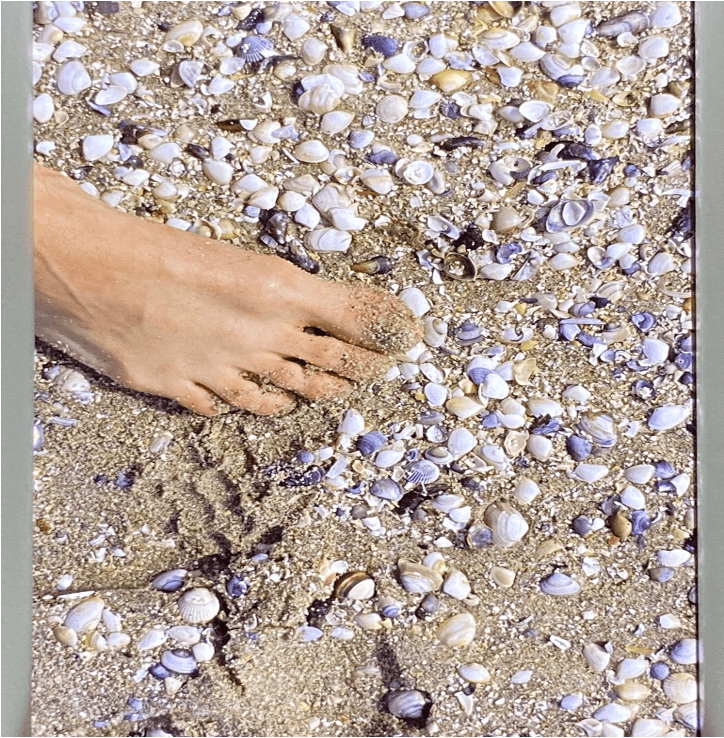
Earthing is when you directly or indirectly (with help) connect your body, to the Earth’s natural healing energies.  This can be done by: going barefoot, swimming in a natural lake, stretching out on the lawn in shorts, or on a sandy beach, sitting on a log or stone, with shorts on, so that the skin touches the earth object’s surface.  It is the direct contact with earth; that is key!

This is not a new concept, of course. Thousands of years ago, “earthing” was recognised in Chinese records, which focused on “Earth Qi”.  Other indigenous cultures throughout time have demonstrated that they have had a very easy and connected relationship with the earth’s healing energies.  Dressing minimally, when possible, and spending time directly touching the earth’s surface was an easy way to gather the earth’s energy into people’s bodies, in the past and now.

For starts, it can be done anywhere you can find a bit of earth; or, it can be done inside your home, with the use of passive earthing contact technology, for sale through various vendors.  Earthing can be a free way to heal many conditions.  And, amazingly, you can even choose to purchase items to assist you to do it more often, indoors, to suit your personal condition or needs.

How can I easily connect to the earth?

You can connect directly to the earth with your body, or buy helping items, like blankets, copper inserted sandals, arm pads for desks. . .

How does it help us humans?

Connecting the human body with the Earth’s electric charge significantly stabilizes our human physiology at the deepest levels.  Both qualitative and quantitative research studies document the effectiveness to our human body and mind.  See the link below for research and discussion of benefits, including a visual mind map. The benefits are holistic, including: calming the mind, lowering stress levels, calming the heart, reducing muscle pain, enhancing immune response to speed wound healing, slowing free radical damage associated with aging, enhancing energy, reducing painful joint inflammation, balancing bone calcium, regulating hormones, calming digestion, improving blood oxygen, enhancing cell function, and improving circulation.  To see the research on these benefits, check out the article linked here.

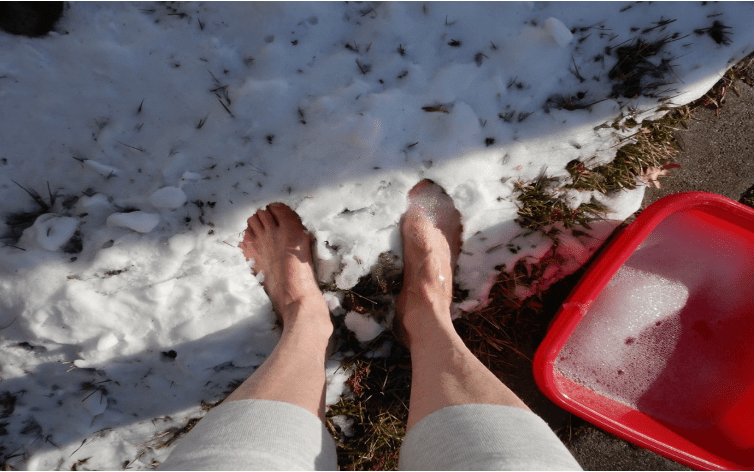
Earthing in Nyack, after the late January snow storm, 2022.

How can I actually do earthing if I do not like to be barefoot, it is cold, or I cannot go outside due to health or work circumstances?

There are products on the market to help with most human conditions. Yes, earthing can be done outside at any time, and inside with the assistance of: grounding blankets for day or night time passive earthing connection; mats for your bare arms, at your computer table; grounding mats for your feet, while sitting inside at your desk or table; sandals with copper conductive inserts, to connect with the earth, while walking outside;  and more. 

Nature path project, for the whole family, or for community locations

A nature path for yourself, your family, or your community is easy to make and fun for all.  You can clear a path and make it around 15 feet or as long as you like.  Divide the path up into segments by putting some stones or non-treated wood branches along the edge of the path and across the path every three feet, or so.  You can make this path circular or straight.  Once you have around five or six segments all cleared and boxed off, you are ready to begin collecting various conducting earth objects.  You can collect and then put different natural items inside each section, which work as conductors to the earth below. Here are some ideas for the different segments in a nature path:

  • grass and moss
  • soft pine cones
  • smooth stones or smooth gravel
  • coarse sand
  • cedar or other bark
  • pine needles
  • mud
Deep mud earthing on a prepared and safe nature trail, which is a half mile long and has various earthing segments.

What about my freshly mopped floors inside and the mess of going outside, barefoot?

Yes, safeguarding the peace in the house and feeling refreshed can be managed by washing the feet after earthing.  This can be as easy as using a nearby hose and having a towel ready at the entrance to the house afterwards. My personal preference, in all weather, is to provide my family members and myself with a foot-sized basin of warm, sudsy water, using biodegradable soup, of course, with a wash cloth in the basin, to clean the feet. Then, I have various towels at the ready, on the door step, for drying, afterwards.  It is very refreshing and relaxing and keeps the harmony in the house. (No more muddy footprints through the house.)

Whether you decide to do your earthing by stepping outside and kicking off your shoes for a walk or just standing in the yard while on the phone; making a planned nature/earthing path at home or in a local park; or getting some of the inside earthing products; my hope is that you have been inspired to give it a try and find your own creative way of connecting with the healing energies of our earth.

Happy Earthing, to you all.

Suzanne Buchauer

Suzanne Buchauer is a licensed Davis Dyslexia Correction Facilitator and Davis Autism Approach Facilitator, dyslexia-works.com, who lives in Upper Nyack, New York.