Categories
Educational Newsletter

Landscaping Event Summary—Upper Nyack Green Committee

by Suzanne Buchauer

On May 14th, 2025, the Upper Nyack Green Committee held a landscaping event in the Old Stone Meeting House, in Upper Nyack, NY.  It was very fun to connect with people, hear from different perspectives and learn from each other.  Each speaker brought in passion and enthusiasm for their topics and it was truly rich in content and a pleasure.  There was a lively Q&A and discussion after the presentations and lots of opportunity to make new contacts and further learn or join in.

This is a summary of the Upper Nyack Green Committee Landscaping Event with links to articles and videos.

Harry Vetter, Chair of the Upper Nyack Green Committee, spoke about some of what the Upper Nyack Green Committee has achieved for our village:

A BRONZE CERTIFIED CLIMATE SMART COMMUNITY!

  • Encouraging gardening with native plants and plants for pollinators
  • Promoting the transition to renewable energy
  • Recent workshops on EV’s and Heat Pumps
  • Advocating for composting
  • Championing campaigns such as Community Solar
  • $70,000 in funding for Village projects such as solar panels on the DPW building
  • Secured free energy audits of two village buildings
  • Petition to reduce “noisy season” by curtailing seasonal ban on gas-powered leaf blowers
  • Planning to launch Street Tree Planting campaign

Patty Mann brought in information on Native Species.  She has actively done research and is using this information on her own property, with great success, as many noticed during the tour of her garden on May 10th, 2025.

Patty’s article and compilations of native plant links, called:  Why Plant Native? And What to Plant, can be found here.

Suzanne Buchauer, will be giving a tour of her do-it-yourself (DIY), 10-year landscaping project, on Saturday, June 28th at 10:00, at her residence (216 Wanamaker Lane).  During the tour, you can see exactly what Suzanne spoke about during the alternative landscaping event, namely:

  • 10-year do-it-yourself (DIY) landscaping project on private property
  • Saving oak trees project and the very large trees/forest strip on private lot—over 50 trees and over 25 varieties.
  • Personal protection tips from poison ivy, ticks and other biting bugs. 
  • Backyard pollinator pathway and butterfly garden
  • Backyard composting of fruit and veggie—what works and easy tips!
  • Leaf composting ideas and how to use leaves in the landscape—leaving the leaves!
  • Organic mowing ideas—mow with high setting and often, to self-fertilize grass

Dana Harkrider, Founder of the Nyack Pollinator Pathway, brought in the following three minute video on pollinator pathways—it is very inspiring, knowing that each of us can make a difference, by planting certain trees, shrubs and flowers in our community, at our work and at home, as we can:

To learn more and join the pollinator pathway effort at your home/work or in your community, please learn more here:


Sue Ridge, from the Gardening Club of Nyack, spoke about the garden club work and the butterfly garden located at Memorial Park—Nyack, New York
To learn more about the Gardening Club of Nyack, please go to:

http://gardenclubofnyack.com

Marcy Denker gave us an overview of her work with The Nyack Tree Project, a community forestry partnership between local volunteers that has coordinated the planting and maintenance of approximately 400 trees along Nyack streets and in the parks since 2016.

Find out how to donate to the project at: https://nyackparks.org/nyacktreeproject

Contact us to participate at: NyackTreeProject@gmail.com

Nyack Tree Project FB page: https://www.facebook.com/profile.php?id=100068874784349

Nyack2030.com is the website for the Village of Nyack’s climate action initiatives. Visit the website to learn about projects and explore the Nyack2030 Climate Action Plan. The Natural Resources chapter starting on page 42 describes the vision of sustainable landscapes and just the kind of community partnerships to build local expertise exemplified in the workshop.

Below is the full Nyack Climate Project 2030 document:

Happy landscaping, everybody!
Categories
Educational

Why plant native?

by Patty Mann

I would like to begin with a quote from the Audobon Society.

 “Over the past century, urbanization has taken intact, ecologically productive land and fragmented and transformed it with lawns and exotic ornamental plants. The continental U.S. lost a staggering 150 million acres of habitat and farmland to urban sprawl, and that trend isn’t slowing. The modern obsession with highly manicured “perfect” lawns alone has created a green, monoculture carpet across the country that covers over 40 million acres. The human-dominated landscape no longer supports functioning ecosystems, and the remaining isolated natural areas are not large enough to support wildlife.

Native plants are those that occur naturally in a region in which they evolved. They are the ecological basis upon which life depends, including birds and people. Without them and the insects that co-evolved with them, local birds cannot survive. For example, research by the entomologist Doug Tallamy has shown that native oak trees support over 500 species of caterpillars whereas ginkgos, a commonly planted landscape tree from Asia, host only 5 species of caterpillars. When it takes over 6,000 caterpillars to raise one brood of chickadees, that is a significant difference.

Unfortunately, most of the landscaping plants available in nurseries are non-native species from other countries. These exotic plants not only sever the food web, but many have become invasive pests, outcompeting native species and degrading habitat in remaining natural areas.”

Many of us have found ourselves in recent years observing ecological disaster after ecological disaster. Climate change, pollution and habitat loss have led to a global mass extinction, and in turn, extinctions lead to more environmental changes that reinforce the original problem. Many of us older folks can easily remember a time when we saw more butterflies, more fireflies and a wider variety of birds. Some of the most shocking reductions have occurred in just the past few years.

Many of us are familiar with the relationship between Monarch butterflies and milkweed. Monarch caterpillars feed on milkweed, and only milkweed, so if there is no milkweed in the landscape, there are no Monarchs. What many of us fail to realize is that this is true for every butterfly and moth. There are a few plants, maybe only one plant, that their caterpillars can eat. And those plants are always native plants.

Suburban homeowners are in a unique position to do something to reverse this extinction trend, as we each own a piece of land that could be managed to become part of the solution, rather than part of the problem. By growing native plants that feed native insects, and by extension, birds, amphibians, reptiles and mammals, and by clearing invasive plants from our yards, we can each to a small part to combat extinctions and encourage biodiversity. And by attacking this problem as a community, we can achieve exponentially more, as individual small plots of land join up and become a larger ecosystem. Every piece of land is potential habitat, and every suburban yard with a lawn and a few non-native plants is habitat lost. So many of the plants we rely on as ornamental landscape plants like daffodils, forsythia, and pachysandra, offer little to no wildlife value.

But growing these plants is not a selfless act. There are many practical benefits for the homeowner and the wider community as well. It is simply easier and cheaper to garden with natives. Native plants require less water to maintain, no fertilizers or pesticides to speak of, and don’t need to be protected from extreme weather, because they have evolved to live in our area. Furthermore, by attracting and supporting native pollinators, they provide pest control for our vegetable gardens.

Native plants also serve to protect our watersheds. Manicured lawns lead to compacted soil that does not absorb water well, and rain washes over the land, pulling away topsoil. It runs into the sewer drains, into our rivers and eventually our oceans. The longer, more vigorous roots of native plants dig deep into the soil, carving channels for water to percolate down into the soil and eventually into the groundwater. As the plants die back, the roots then decay, adding organic material into the soil, which improves soil quality, encourages important microbial life and sequesters carbon.

I have provided a handout with a list of resources to learn about and acquire native plants and a list of plants that I have found to be deer resistant in our neighborhood. I encourage anyone interested in gardening, wildlife or the environment to spend a little time poking around online as there are countless YouTube videos to watch on the subject.

What plants should I plant?

It is best to plant a variety of plants that are found in your ecoregion. Good resources to find out what plants are native to your region are as follows:

You can also start by visiting a local native nursery. We are lucky enough to have one right on our doorstep, https://www.cottagecreekgardens.com/ in Valley Cottage.

If you are travelling upstate, make sure to visit https://catskillnativenursery.com/ in Kerhonksen.

Rohslers nursery in Allendale, NJ has an excellent selection of native plants https://rohslers.com/

Van Houten Farms in Pearl River is always improving its selection of native plants https://vanhoutenfarmsny.com/

The Native Plant Center at SUNY Westchester https://www.sunywcc.edu/about/npc/ has an amazing native plant sale every spring.

My favorite sources for native plant seed online is Prairie Moon Nursery https://www.prairiemoon.com/ and Everwilde https://www.everwilde.com/

Deer resistance

In our neighborhood we have a particularly heavy deer presence. Many plants in our nurseries will be labeled as deer resistant but still be quickly consumed by our deer. Even worse, deer in different areas tend to eat different things. Here is a list of the most deer resistant native plants in my Upper Nyack garden and those I have observed Hester Haring Cason Preserve. The list is not comprehensive.

  • Mint family plants: Pycnanthemums (Mountain Mints), Monardas (Bee Balms), Hyssops.
  • Milkweeds (Aesclepius).
  • St Johns Wort (Hypericum)
  • Silver Wormwood (Artemisia ludoviciana)
  • Sneezeweed (Helenium Autumnale)
  • Sedges (Carex species)
  • Most native grasses, including little bluestem, big bluestem, switchgrass, prairie dropseed, blue grama, muhly grass and purple lovegrass.
  • Bonesets (eupatorium)
  • Rattlesnake Master (eryngium yuccafolium)
  • Most goldenrods and asters.
  • Antennarias – Pearly Everlasting and Pussytoes.
  • Alliums: Allium cernuum (Nodding Onion), Allium canadense (Meadow Garlic/Canada Onion), and Allium tricoccum (Wild Leek/Ramp)
  • Blue Flag Iris
  • Juniper
  • Spruce
  • Tickseed (Coreopsis)
  • Black Eyed Susan (Rudbeckia) and Coneflower (Echinacea)
Categories
Event

Next Week (February 7): Nyack Climate Solutions Fair

Don’t miss the upcoming Nyack Climate Solutions Fair on Wednesday, February 7 from 7:00-9:00 PM at the Nyack Center (58 Depew Avenue).

All sorts of exciting local groups and initiatives will be represented, including the Upper Nyack Green Committee. Join us to learn more from neighbors and to get involved in these community efforts!

Categories
Educational Event

Outreach at the Upper Nyack Block Party

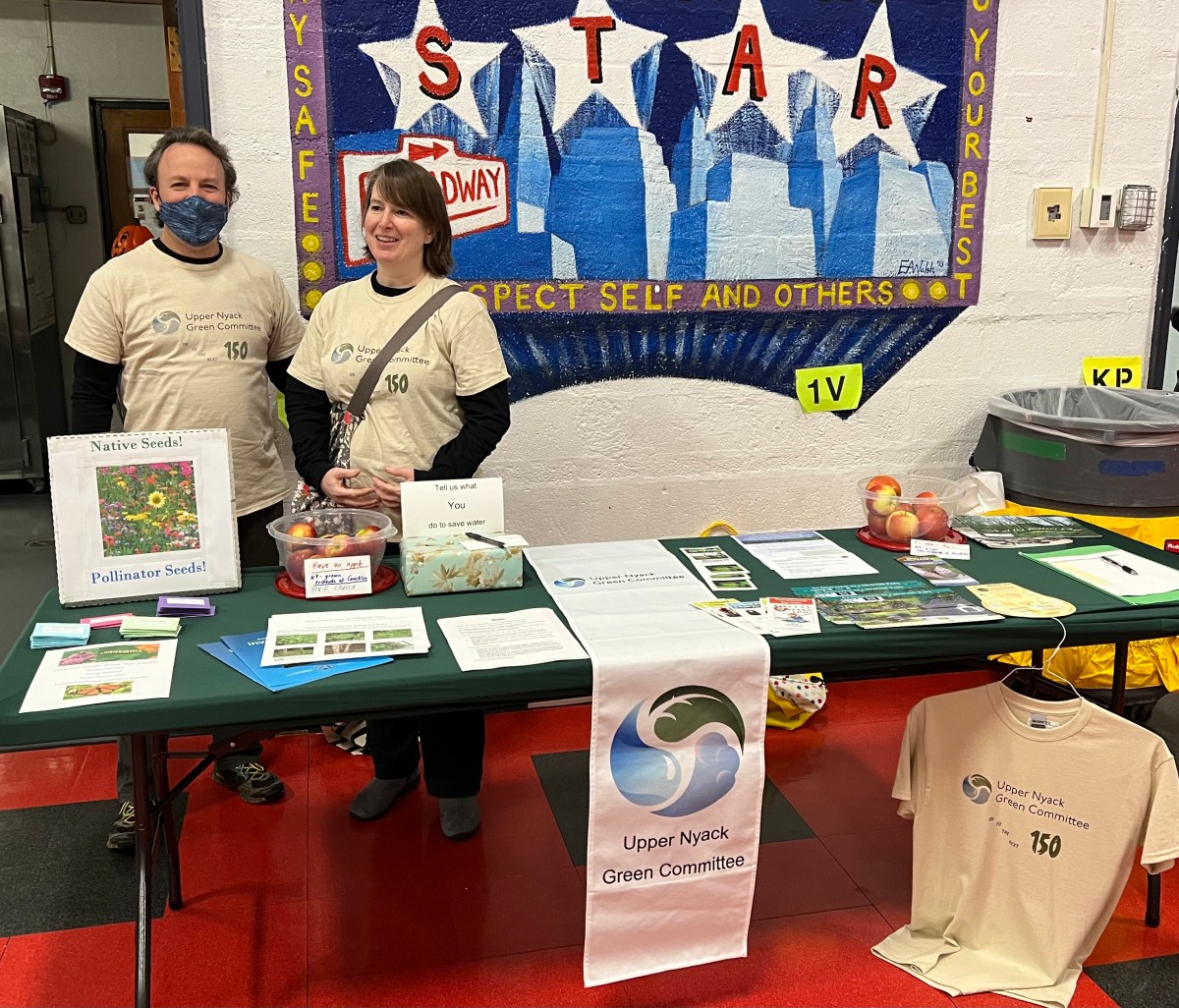
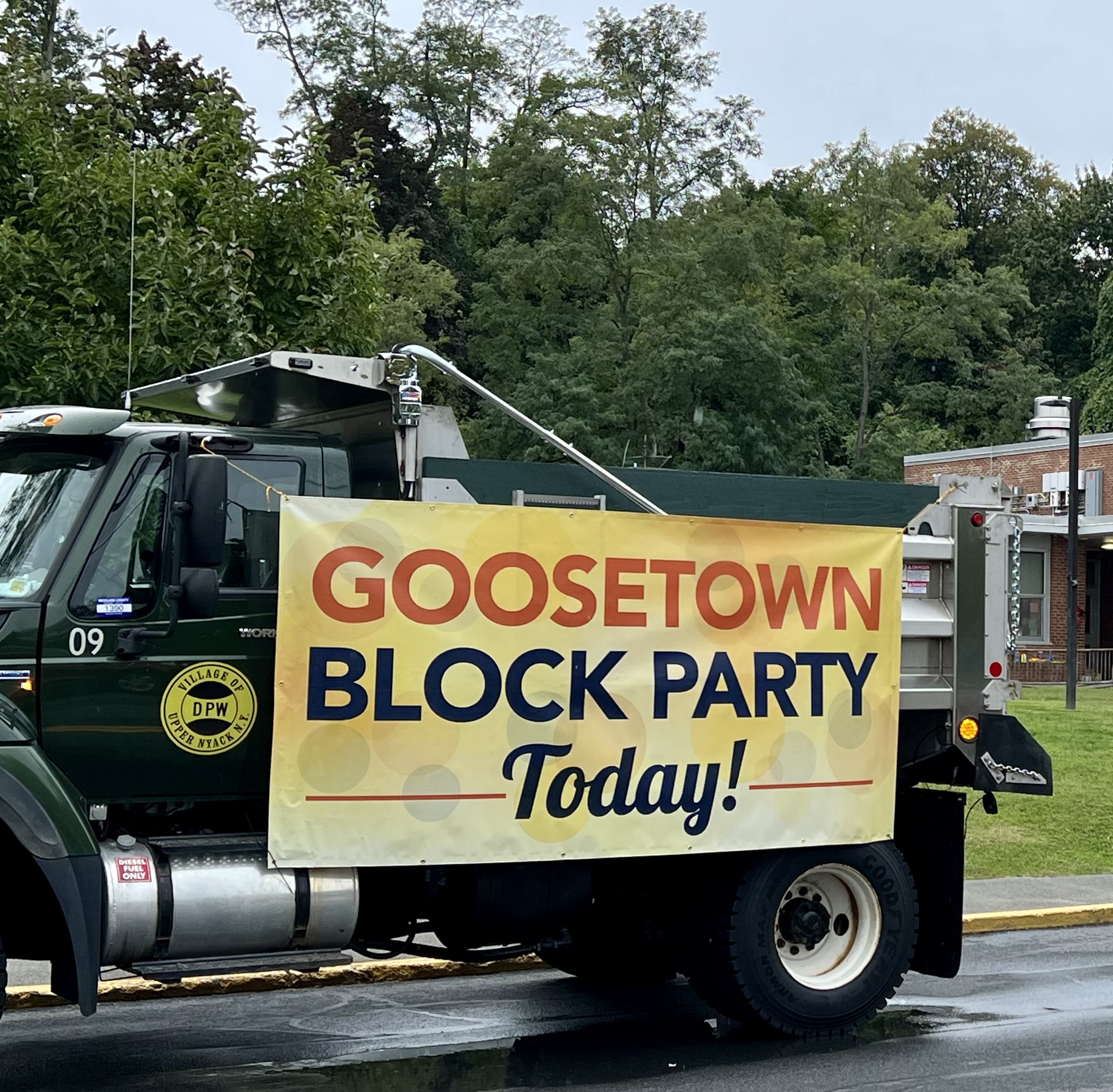
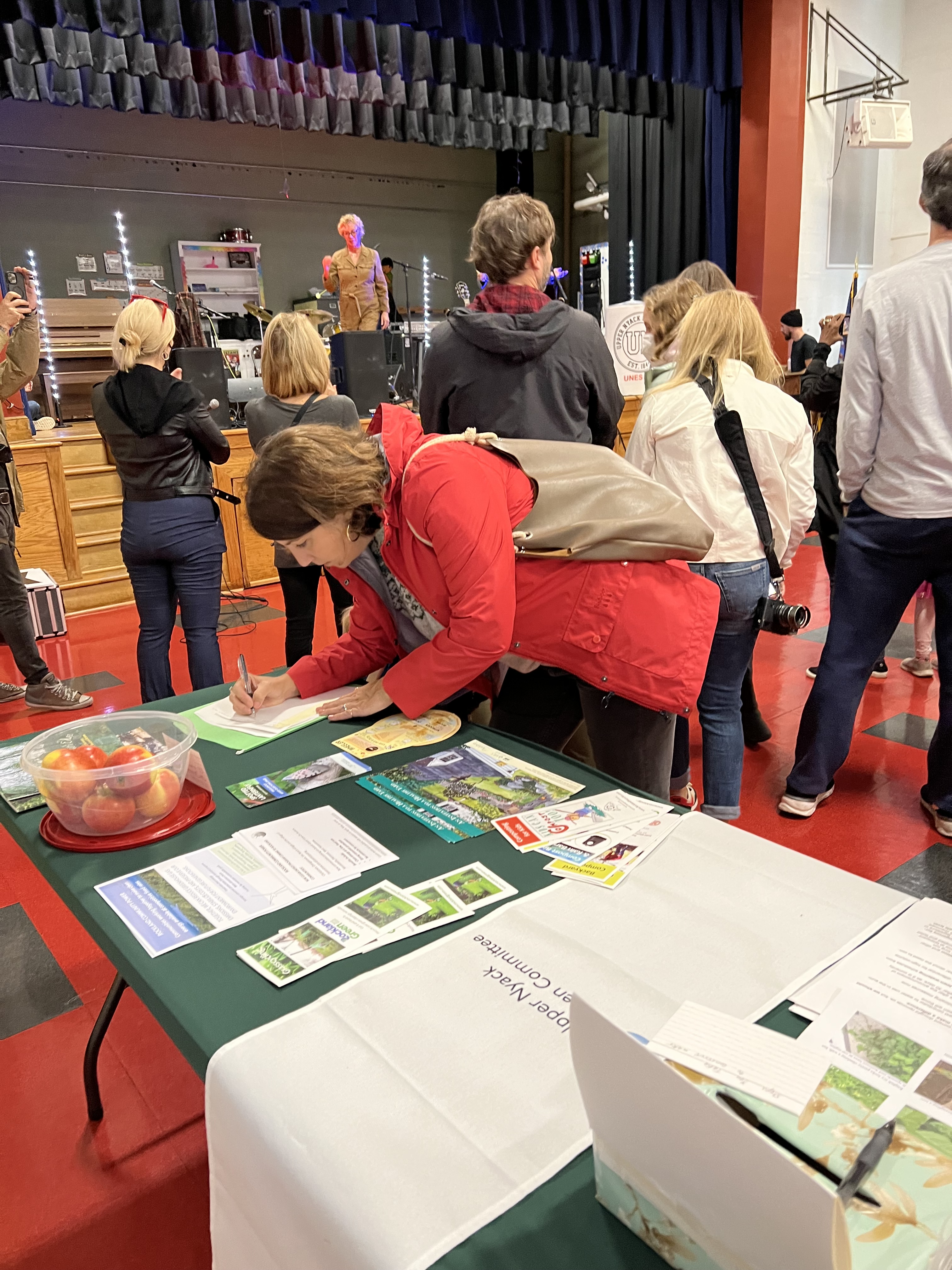
Representatives of the Green Committee recently joined other residents to celebrate Upper Nyack’s 150th anniversary at the village block party. Due to the weather, the events moved largely indoors. The Green Committee table saw plenty of curious visitors, including many kids. The seeds we handed out and the New York orchard apples were big hits. The topics of highest interest among residents were: invasive plants and what to do about them; composting; learning about water conservation; lantern flies (several spottings in Nyack, some in Upper Nyack); and noise and air pollution from gas-powered lawn equipment.


Thanks to all who helped the Green Committee in its outreach!

Categories
Educational

Did You Know? Important Facts About Gas-Powered Leaf Blowers

The Green Committee has put together this one-pager with a few brief and alarming facts about gas-powered leaf blowers. Feel free to share it with your neighbors and friends. Upper Nyack’s Sound Law is now in effect, limiting the use of gas-powered leaf blowers to two clean-up seasons (March 15-May 15, and September 15-December 15). Please speak to your landscapers to ensure that they are fully informed. We look forward to a less polluted and quieter summer for all!

Categories
Op-Eds

The Trees’ New Year’s Wish

by Suzanne Buchauer

Our Trees got together and wrote us a letter.

Dearest Humans,

Thank you for providing us with a place on your property. I love providing shade for your bodies, branches for children to climb on, a spot for a tree house, beauty for your eyes, oxygen for your noses, and the gentle sound of rustling leaves for your ears. Since being out of the forest, for so long, we wish to tell you that sometimes, we can become cold and hungry; we wanted to write and explain to you what would help us feel better and help us remain healthy for you, for years to come.

Please, let us have the food that was made for us. Let us explain how easy this will be for you to help us year round.

Please place the leaves that fall from our branches around the base of our trunk each fall. If you want to know how we prefer to live, go to the forest and have a look. In the forest, the leaves fall and stay at our cousins feet, to feed, warm and nourish them.

It is very frustrating when we hear the blowers come and see you with rake in hand, then watch our food and bedding being taken away each year. We love and need our food. What we sincerely wish for and desperately need is for the leaves to be left at the foot of our trunks. It can be a ring, the size that our majestic arms extend—consider it free mulch, with benefits. It provides us with vital nutrition, which we need to stay healthy and strong. As the leaves break down, they will also enrich your soil around our roots, which we will then thrive in, and the leaves will turn into rich black hummus, with time. We call that black gold.

There are disadvantages for you humans as well as us trees, if you take our leaves away.

If you take away our leaf food, it has to be transported, which costs time and costs you money.

If you take away our leaf food and leave the place at the foot of our trunks bare, we do not have a cozy blanket to protect our roots during a harsh winter and may become weak.

If you take away our leaf food and it is taken to a dumping site, the leaves sit on the dump in huge piles, which then produces methane gasses which hurt humans and our planet.

If you take away our leaf food your soil will not be enriched by the leaves, as they naturally decompose.

If you take away our leaf food, we will be very hungry and become unhealthy, so you will have to spend money to buy and use fertilizer and chemical food and treat us for disease.

If you take away our leaf food and replace the area below our trunk with colored mulch, it adds chemicals to our soil and it is not healthy for us.

We notice that you may not find pleasure in the way our food looks and we were thinking that may be why you want to get rid of it. How about this idea, we had, to help you:

If you do not like the look of our leaf food, you can make the mulch leaf ring and put wood chips on top. That would help the food break down easier and even be better for us, trees.

Leaves are our natural food; we love leaves and need our leaves. When you take them away or blow/rake them to another place in the yard, you are taking our leaf food away from our roots.

Please, allow us to keep the leaves which are made for us to eat, so that we can stay healthy for you and all of your senses, and so that you can enjoy us in your yard and on your property.

In hope and with care, that is our Happy New Year tree wish.

Yours Treely,

Your Trees.

Suzanne Buchauer is a licensed Davis Dyslexia Correction Facilitator and Davis Autism Approach Facilitator, dyslexia-works.com, who lives in Upper Nyack, NY.

This article originally appeared in the Earth Matters section of Nyack News & Views.

Categories
Newsletter

What is Grasscycling?

By Judy Ryan

August 6, 2021

As environmentally conscious citizens, we dutifully carry our bins of plastic, glass, metal and paper to the curb each week.  In addition, many village residents drag to the curb heavy bags of grass clippings.

It turns out that’s a chore we can give up without guilt.  Grasscycling means leaving grass clippings in place to nourish our lawns with nitrogen and other organic nutrients. Clippings also hold in moisture, and if we add proper lawn watering techniques, we can significantly reduce water usage.  According to Planet Natural, the EPA “estimates that watering lawns accounts for 30-60% of water [usage] in summer.” 

I’ve gleaned my information from a myriad of excellent websites (listed below). Information is available from environmentally focused organizations, but also from businesses selling lawn products.  Some are geared to those obsessive about their lawns, and some are for the rest of us. Cornell Cooperative Extension offers three detailed pages of information about lawn care without pesticides.  Gardening Know How assures me that “you’re probably already [grasscycling] and just didn’t know.  Essentially, it is “mow and go.”

An old adage is that not removing grass clippings can lead to thatch (a mat of tangled grass), but grasscycling can actually prevent the growth of thatch.  Only if clippings settle in clumps is there a risk of thatch.  In that case, use a rake to spread out the clumps evenly over your lawn.

Here are some tips from Planet Natural:

  1. Don’t cut the lawn too short.  Cut no more than 1/3 of a blade.  Taller grass exposes more leaf surface to the sun, and also shades the soil from rapid evaporation.
  2. Make sure your mower blades are sharp, so as not to tear grass.
  3. Let grass clippings settle on their own – only take a rake to clumps.
  4. Water thoroughly but not often.  Thorough watering encourages deep root systems; it’s shallow roots that can lead to thatch.  And make sure grass is dry before you water.  It’s best to water in the early morning, when the air is cooler and water won’t evaporate too quickly. 
  5. It’s a good idea to add high quality organic fertilizer in the spring, but you’ll need less because of the nitrogen in the clippings. 
  6. It isn’t necessary to buy a mulching mower, but if you do, it can mulch leaves directly into your lawn in the fall.  This also contributes to a healthier lawn  … but more about that in the fall.
  7. We don’t see old-fashioned push mowers much any more, but the newer ones are lightweight, easy to maneuver, and their spinning blades are ideal for clipping grass.  You can skip your walk that day!

A blog on Lawnstarter’s website quotes Cassy Aoyagi, a landscaper in Los Angeles, where droughts are intensifying: “Grass is 80% water, so in essence you’re watering your lawn a bit by leaving clippings in place.”  According to Planet Natural, “Much of [our] money for lawn products goes to those that degrade the soil, pollute any water they reach, and pose … health threats to humans, … pets, and wildlife….” The writer states that “60-70 million birds die from pesticide poisoning each year in the US alone.” 

Yard waste in landfills is another major issue on a planet filled with garbage.  Since 1980 yard waste in landfills has been reduced from 27 million tons to 10.8 million tons according to the Lawnstarter blog.   Many states have passed laws limiting or banning yard clippings in their landfills.  Composting grass clippings has become common.  But leaving most of them in place remains the healthiest option for your lawn, as regular mowing and mulching “provide a barrier to weed seeds, preventing them from taking root.”

Since we’re heading into late summer, you may want to check the Cornell University Cooperative Extension website to learn how to prepare and plant your lawn in September, as the air cools.  Even us “mow and go” folks can follow some of its simple tips, like loosening soil compaction and incorporating topsoil, if needed, into the soil beneath.  Others can dig into its extensive information about a truly beautiful pesticide-free lawn.

Grasscyling is not a burden.  It makes lawn care easier, requiring only that we leave grass clippings in place, water with care, and fertilize organically only in spring. It turns out that the practice of leaving grass clippings on our lawns is a win for our lawns, a win for our environment, and a win for the health of everyone.    

http://www.lawnstarter.com/blog

https://www.gardeningknowhow.com

https://www.planetnatural.com

https://www.rocklandcce.org

Categories
Newsletter

How Lawn Pesticides Impact Health and Environment

By Addison Chappell

Landscapers often use pesticides to produce perfect, bright green lawns for their clients. But what exactly are they spraying? Is it safe? These are questions homeowners should be asking.

Beginning in spring, and continuing through fall, legions of landscapers and lawn services move into action. It is estimated that in 2019, the lawn care industry generated a combined total revenue of just over $99 billion, with each household spending an average of $503 on lawn care and gardening activities (Mazareanu).  Pesticides account for about $6.8 billion of that amount. In the US alone, more than 70 million pounds of pesticides are dumped on some of America’s 30 million acres of lawns each year.

Many of pesticide companies promote their lawn products as “green” or “environmental”. The truth may be the opposite. In March 2020, a Washington DC non-profit group, beyondpesticides.org, whose mission is to work with allies to protect public health and the environment by transitioning to a world free of toxic pesticides, sued one of the biggest lawn care companies, TruGreen, for misrepresenting the safety of the toxic chemicals it uses. 

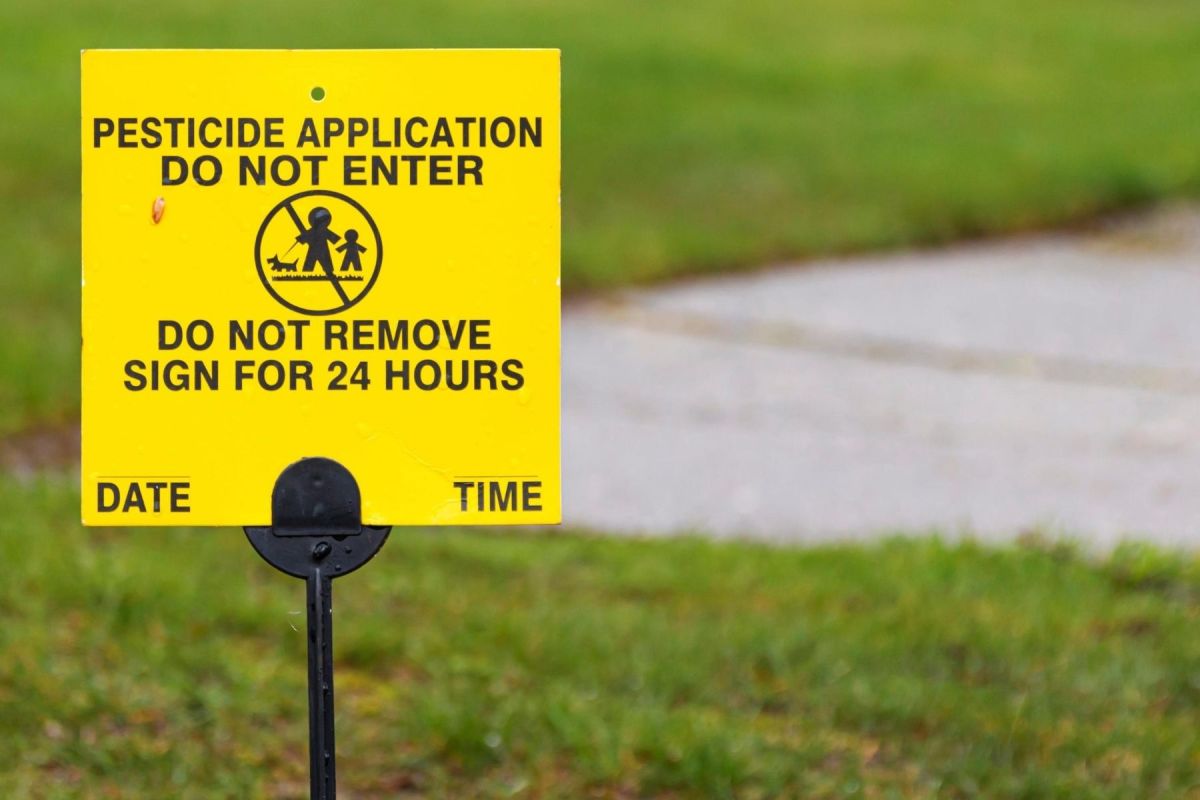
Under New York state law, the pesticide company is required to notify you in advance whenever a pesticide application will be applied to your neighbor’s lawn. Companies are also required to put up small signs for at least 24 hours that indicate a lawn has been sprayed. This notification lists all the chemicals that are used on the lawn. Many of these chemicals are dangerous. They include carcinogens such as Talstar (Bifenthrin), reproductive and developmental toxins such as Barricade 4FL (Prodiamine), and endocrine disruptors such as Sevin (Carbaryl). A sizable number of these chemicals are banned in other countries.  

The impact on the environment is also profound. Pesticides can contaminate soil, water, turf, and other vegetation. In addition to killing insects or weeds, lawn pesticides can be toxic to a host of other organisms including birds, fish, beneficial insects, pets, and other non-target plants.

What can you do:

Here are some things you can do to avoid these toxins:

  1. Leave it alone! Your lawn is an ecosystem that supports a wide variety of plants and insects. Let them thrive naturally and see what happens. You can still achieve a green lawn!
  2. Convert it! Use some of that lawn space for a vegetable garden. Growing your own food is both rewarding and healthy. If that’s not for you, convert some of that grass into a flower bed with native plants that attract pollinators.  
  3. Use Nature! Find a certified natural alternative that is proven not to be harmful to your health or the environment. Sometimes this means adding another native plant to the mix to discourage pests, or it might mean changing the pH balance of your lawn slightly to dissuade certain plants from thriving.
  4. Get involved! Help to educate your neighbors on the use of pesticides in lawn applications. Demand meaningful legislation from lawmakers to outlaw these toxic substances and to encourage the industry to move to more organic and healthful alternatives.

We need to rethink the importance of perfect green lawns. We should be asking ourselves: What impact are we having on the environment? Are there better ways to maintain our lawns? Are pesticides worth the risk of endangering both human health and the environment?

Read More:

To learn more about the risks of pesticides, check out some of the articles below:

Categories
Newsletter

Arbor Day in Upper Nyack

Arbor Day, April 27, was blustery and cool, dampening attendance but not the spirit of Upper Nyack’s Arbor Day celebration at the Old Stone Church.  Flowers and snacks of fruit, cheese and chocolate made an inviting centerpiece for Mayor Karen Tarapata’s table of books and flyers about trees, including a children’s book.  She provided an extensive list of online resources (see PDF).   She also set up a table for kids, with natural materials for art projects, and packets of wildflowers to take home.  A newly planted Kousa dogwood tree, provided by the village, graced the outdoor garden, where new shrubs had been planted by the Garden Club of Nyack. The village’s support of planting native tree species in our community was promoted by the distribution to residents of 15 saplings of dogwood, eastern red cedar and paper birch (in 1-gallon containers).  They were generously provided by resident Bill Schmidt. It is anticipated that additional saplings will be available in the fall.  The Tree Committee of the Green Committee offered additional handouts, including Tree Facts and a list of tree species suitable for our area (see PDF’s).  

Information about CCA (Community Choice Aggregation)  was available at a table supplied with fliers and other info regarding the proposal to bring low-cost renewable electricity to the village.  Mike Gordon, a representative from Joule Energy, a CCA administrator, was there to answer questions.  (https://www.joulecommunity.com). He and Jeff Domanski, whose company does outreach for Joule, engaged with a number of interested villagers.  A flyer provided by the Green Committee is available as a PDF.

The Green Committee also offered information about noise pollution, including a poster and handouts on the benefits of electric mowers and leaf blowers.  Specific data on the high rates of noise and air pollution created by gas landscaping machines was included as well.  Residents were reminded that our hearing and emotional well-being, as well as our lungs, are affected by the sound levels in our neighborhoods. (see attached PDF’s).  Other communities have put regulations in place.  (https://www.youtube.com/watch?v=3lvKX7UIYWM&feature=youtu.be)

Following the event at the Old Stone Meeting House, Mayor Tarapata led a walk through the Cason property, christened River Hook Park. The village community has been clear in its preference for a passive park, and the mayor favors planting of native trees, shrubs, and flowering plants for pollinators.  She’s also considering a playground of wood stumps and simple structures.   The village was given 16 lilac bushes for the Preserve. The mayor is looking for volunteers Saturday, May 11 at 11 AM to help plant them on the property. Meet at the Broadway entrance.

Arbor Day reminds us that trees are providers of beauty, peace, and shade, and provide safe habitats for the natural creatures around us. They capture carbon dioxide, and are crucial to the survival of our planet. If every day were arbor day, the world would be a greener, cooler, and healthier home for us all.

The Green Committee is an advisory and advocacy group made up of Upper Nyack residents working toward the environmental health and resiliency of our village in the face of climate change.  Issues of concern include air and noise pollution; tree planting designed to survive extreme weather; water conservation, sewers and drainage; green landscaping; more use of renewable energy sources; and education of the public in these areas and others of concern to residents. For more information, please contact Judy Ryan at jlryan4181@aol.com or 845 358-4322.