Categories
Educational Newsletter

Landscaping Event Summary—Upper Nyack Green Committee

by Suzanne Buchauer

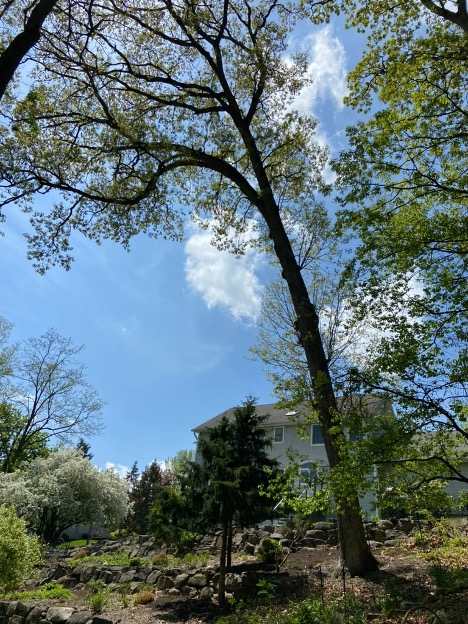
On May 14th, 2025, the Upper Nyack Green Committee held a landscaping event in the Old Stone Meeting House, in Upper Nyack, NY.  It was very fun to connect with people, hear from different perspectives and learn from each other.  Each speaker brought in passion and enthusiasm for their topics and it was truly rich in content and a pleasure.  There was a lively Q&A and discussion after the presentations and lots of opportunity to make new contacts and further learn or join in.

This is a summary of the Upper Nyack Green Committee Landscaping Event with links to articles and videos.

Harry Vetter, Chair of the Upper Nyack Green Committee, spoke about some of what the Upper Nyack Green Committee has achieved for our village:

A BRONZE CERTIFIED CLIMATE SMART COMMUNITY!

  • Encouraging gardening with native plants and plants for pollinators
  • Promoting the transition to renewable energy
  • Recent workshops on EV’s and Heat Pumps
  • Advocating for composting
  • Championing campaigns such as Community Solar
  • $70,000 in funding for Village projects such as solar panels on the DPW building
  • Secured free energy audits of two village buildings
  • Petition to reduce “noisy season” by curtailing seasonal ban on gas-powered leaf blowers
  • Planning to launch Street Tree Planting campaign

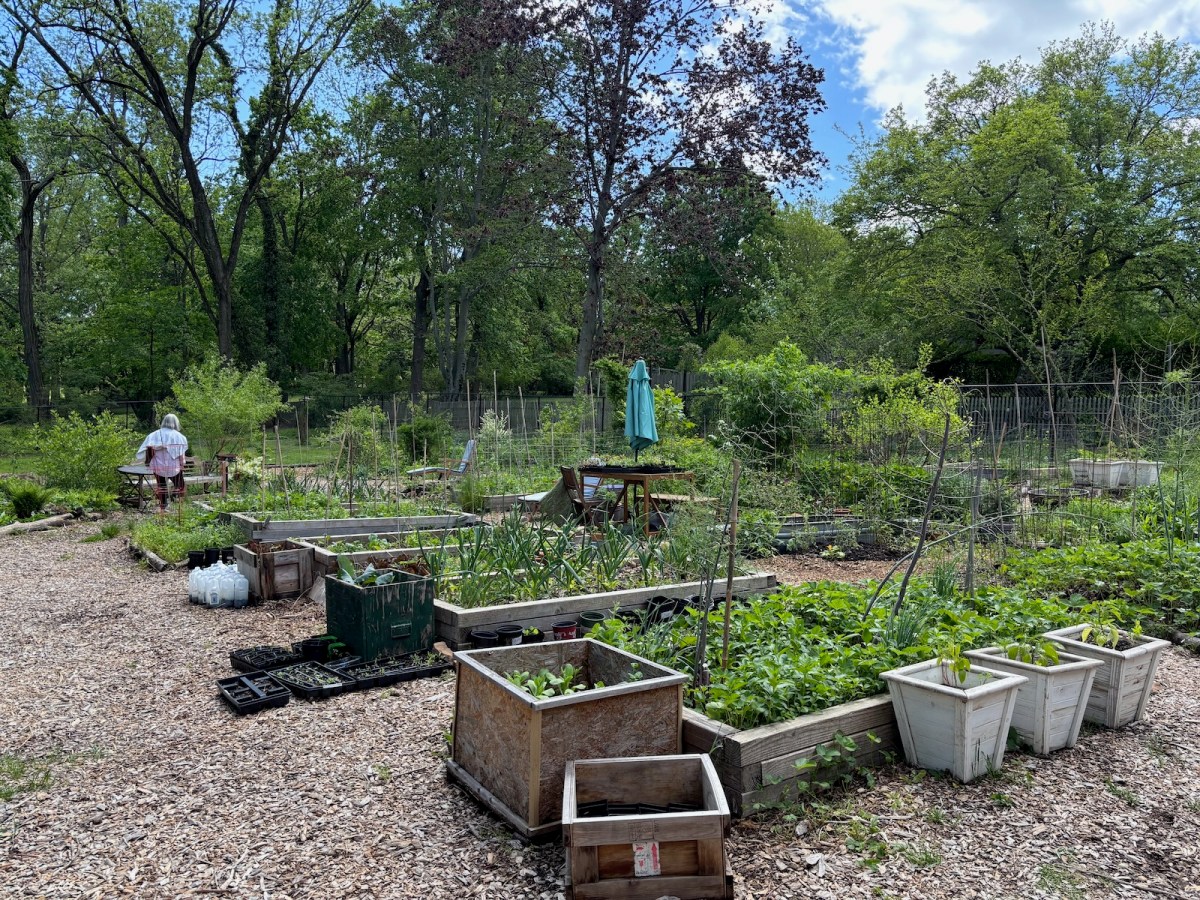
Patty Mann brought in information on Native Species.  She has actively done research and is using this information on her own property, with great success, as many noticed during the tour of her garden on May 10th, 2025.

Patty’s article and compilations of native plant links, called:  Why Plant Native? And What to Plant, can be found here.

Suzanne Buchauer, will be giving a tour of her do-it-yourself (DIY), 10-year landscaping project, on Saturday, June 28th at 10:00, at her residence (216 Wanamaker Lane).  During the tour, you can see exactly what Suzanne spoke about during the alternative landscaping event, namely:

  • 10-year do-it-yourself (DIY) landscaping project on private property
  • Saving oak trees project and the very large trees/forest strip on private lot—over 50 trees and over 25 varieties.
  • Personal protection tips from poison ivy, ticks and other biting bugs. 
  • Backyard pollinator pathway and butterfly garden
  • Backyard composting of fruit and veggie—what works and easy tips!
  • Leaf composting ideas and how to use leaves in the landscape—leaving the leaves!
  • Organic mowing ideas—mow with high setting and often, to self-fertilize grass

Dana Harkrider, Founder of the Nyack Pollinator Pathway, brought in the following three minute video on pollinator pathways—it is very inspiring, knowing that each of us can make a difference, by planting certain trees, shrubs and flowers in our community, at our work and at home, as we can:

To learn more and join the pollinator pathway effort at your home/work or in your community, please learn more here:


Sue Ridge, from the Gardening Club of Nyack, spoke about the garden club work and the butterfly garden located at Memorial Park—Nyack, New York
To learn more about the Gardening Club of Nyack, please go to:

http://gardenclubofnyack.com

Marcy Denker gave us an overview of her work with The Nyack Tree Project, a community forestry partnership between local volunteers that has coordinated the planting and maintenance of approximately 400 trees along Nyack streets and in the parks since 2016.

Find out how to donate to the project at: https://nyackparks.org/nyacktreeproject

Contact us to participate at: NyackTreeProject@gmail.com

Nyack Tree Project FB page: https://www.facebook.com/profile.php?id=100068874784349

Nyack2030.com is the website for the Village of Nyack’s climate action initiatives. Visit the website to learn about projects and explore the Nyack2030 Climate Action Plan. The Natural Resources chapter starting on page 42 describes the vision of sustainable landscapes and just the kind of community partnerships to build local expertise exemplified in the workshop.

Below is the full Nyack Climate Project 2030 document:

Happy landscaping, everybody!
Categories
Educational

Why plant native?

by Patty Mann

I would like to begin with a quote from the Audobon Society.

 “Over the past century, urbanization has taken intact, ecologically productive land and fragmented and transformed it with lawns and exotic ornamental plants. The continental U.S. lost a staggering 150 million acres of habitat and farmland to urban sprawl, and that trend isn’t slowing. The modern obsession with highly manicured “perfect” lawns alone has created a green, monoculture carpet across the country that covers over 40 million acres. The human-dominated landscape no longer supports functioning ecosystems, and the remaining isolated natural areas are not large enough to support wildlife.

Native plants are those that occur naturally in a region in which they evolved. They are the ecological basis upon which life depends, including birds and people. Without them and the insects that co-evolved with them, local birds cannot survive. For example, research by the entomologist Doug Tallamy has shown that native oak trees support over 500 species of caterpillars whereas ginkgos, a commonly planted landscape tree from Asia, host only 5 species of caterpillars. When it takes over 6,000 caterpillars to raise one brood of chickadees, that is a significant difference.

Unfortunately, most of the landscaping plants available in nurseries are non-native species from other countries. These exotic plants not only sever the food web, but many have become invasive pests, outcompeting native species and degrading habitat in remaining natural areas.”

Many of us have found ourselves in recent years observing ecological disaster after ecological disaster. Climate change, pollution and habitat loss have led to a global mass extinction, and in turn, extinctions lead to more environmental changes that reinforce the original problem. Many of us older folks can easily remember a time when we saw more butterflies, more fireflies and a wider variety of birds. Some of the most shocking reductions have occurred in just the past few years.

Many of us are familiar with the relationship between Monarch butterflies and milkweed. Monarch caterpillars feed on milkweed, and only milkweed, so if there is no milkweed in the landscape, there are no Monarchs. What many of us fail to realize is that this is true for every butterfly and moth. There are a few plants, maybe only one plant, that their caterpillars can eat. And those plants are always native plants.

Suburban homeowners are in a unique position to do something to reverse this extinction trend, as we each own a piece of land that could be managed to become part of the solution, rather than part of the problem. By growing native plants that feed native insects, and by extension, birds, amphibians, reptiles and mammals, and by clearing invasive plants from our yards, we can each to a small part to combat extinctions and encourage biodiversity. And by attacking this problem as a community, we can achieve exponentially more, as individual small plots of land join up and become a larger ecosystem. Every piece of land is potential habitat, and every suburban yard with a lawn and a few non-native plants is habitat lost. So many of the plants we rely on as ornamental landscape plants like daffodils, forsythia, and pachysandra, offer little to no wildlife value.

But growing these plants is not a selfless act. There are many practical benefits for the homeowner and the wider community as well. It is simply easier and cheaper to garden with natives. Native plants require less water to maintain, no fertilizers or pesticides to speak of, and don’t need to be protected from extreme weather, because they have evolved to live in our area. Furthermore, by attracting and supporting native pollinators, they provide pest control for our vegetable gardens.

Native plants also serve to protect our watersheds. Manicured lawns lead to compacted soil that does not absorb water well, and rain washes over the land, pulling away topsoil. It runs into the sewer drains, into our rivers and eventually our oceans. The longer, more vigorous roots of native plants dig deep into the soil, carving channels for water to percolate down into the soil and eventually into the groundwater. As the plants die back, the roots then decay, adding organic material into the soil, which improves soil quality, encourages important microbial life and sequesters carbon.

I have provided a handout with a list of resources to learn about and acquire native plants and a list of plants that I have found to be deer resistant in our neighborhood. I encourage anyone interested in gardening, wildlife or the environment to spend a little time poking around online as there are countless YouTube videos to watch on the subject.

What plants should I plant?

It is best to plant a variety of plants that are found in your ecoregion. Good resources to find out what plants are native to your region are as follows:

You can also start by visiting a local native nursery. We are lucky enough to have one right on our doorstep, https://www.cottagecreekgardens.com/ in Valley Cottage.

If you are travelling upstate, make sure to visit https://catskillnativenursery.com/ in Kerhonksen.

Rohslers nursery in Allendale, NJ has an excellent selection of native plants https://rohslers.com/

Van Houten Farms in Pearl River is always improving its selection of native plants https://vanhoutenfarmsny.com/

The Native Plant Center at SUNY Westchester https://www.sunywcc.edu/about/npc/ has an amazing native plant sale every spring.

My favorite sources for native plant seed online is Prairie Moon Nursery https://www.prairiemoon.com/ and Everwilde https://www.everwilde.com/

Deer resistance

In our neighborhood we have a particularly heavy deer presence. Many plants in our nurseries will be labeled as deer resistant but still be quickly consumed by our deer. Even worse, deer in different areas tend to eat different things. Here is a list of the most deer resistant native plants in my Upper Nyack garden and those I have observed Hester Haring Cason Preserve. The list is not comprehensive.

  • Mint family plants: Pycnanthemums (Mountain Mints), Monardas (Bee Balms), Hyssops.
  • Milkweeds (Aesclepius).
  • St Johns Wort (Hypericum)
  • Silver Wormwood (Artemisia ludoviciana)
  • Sneezeweed (Helenium Autumnale)
  • Sedges (Carex species)
  • Most native grasses, including little bluestem, big bluestem, switchgrass, prairie dropseed, blue grama, muhly grass and purple lovegrass.
  • Bonesets (eupatorium)
  • Rattlesnake Master (eryngium yuccafolium)
  • Most goldenrods and asters.
  • Antennarias – Pearly Everlasting and Pussytoes.
  • Alliums: Allium cernuum (Nodding Onion), Allium canadense (Meadow Garlic/Canada Onion), and Allium tricoccum (Wild Leek/Ramp)
  • Blue Flag Iris
  • Juniper
  • Spruce
  • Tickseed (Coreopsis)
  • Black Eyed Susan (Rudbeckia) and Coneflower (Echinacea)
Categories
Educational Event Newsletter

Green Committee Accomplishments Honored by Upper Nyack Board of Trustees

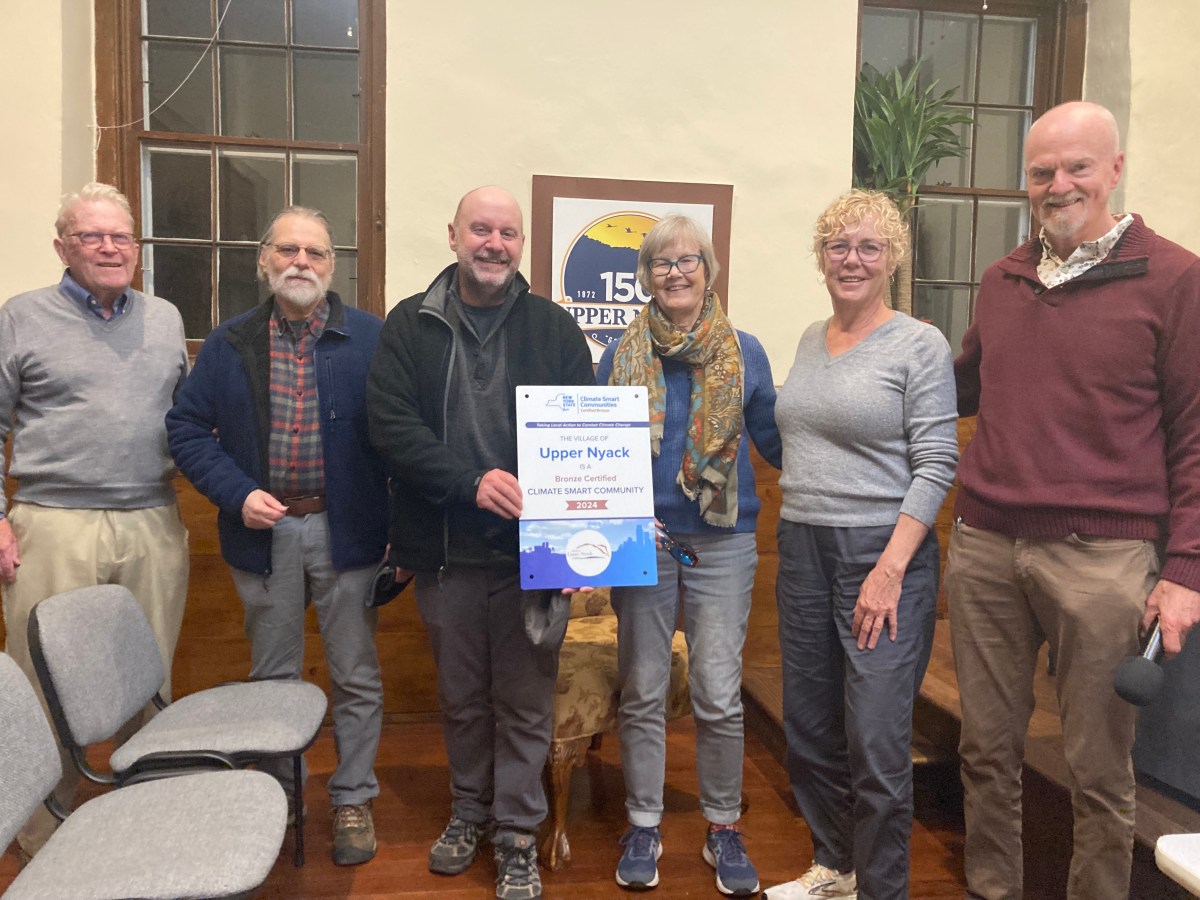
It was a special moment at the Upper Nyack Board of Trustees meeting on Thursday, October 17, when the Green Committee was thanked for the hard work and successes that our members have helped the village achieve. There is brand new plaque proclaiming Upper Nyack as a Bronze Certified Climate Smart Community. Pictured above, from left to right: Bill Ryan, Rob Picardi, Addison Chappell (co-chair of the Climate Smart Task Force, together with Peggy Kurtz, who joined the meeting online), Judy Ryan, Mayor Karen Tarapata, and Harry Vetter, Green Committee chair. The Committee is grateful for all its members who chipped in hours of work for helping the village achieve this status. It is just the start of an ongoing process to improve our village’s, and the region’s, sustainability. Upper Nyack residents: Your help, ideas, and volunteering in the coming months and years are much needed and appreciated!

Categories
Educational Event

Upper Nyack Wins Bronze Certification for Climate

The Village of Upper Nyack has achieved the New York State Bronze Certification as a Climate Smart Community, highlighting its commitment to sustainability and environmental stewardship. This certification recognizes the village’s comprehensive efforts to reduce greenhouse gas emissions and enhance resilience to climate change, largely driven by the initiatives of the Upper Nyack Green Committee and the Climate Smart Communities Task Force. Their dedication to energy efficiency improvements, community engagement, and strategic planning has played a crucial role in advancing climate-friendly practices. By implementing these initiatives, Upper Nyack not only demonstrates leadership in combating climate change but also sets a precedent for other communities aiming to pursue similar environmental goals. Read more in the Rockland County Business Journal article here. Read more about Climate Smart Communities here.

Categories
Educational Newsletter

What Can I Do To Save Money and Help Our Climate?

Four fun and easy ways to save money and energy in your home right away!

by Suzanne Buchauer

“Help!  The climate crisis seems too big, and I just don’t know where to start!”, you might hear or even say.  How frustrating and draining! If only there was a way to save more money and help the environment at the same time…

When ready, here are four strategies to find relief from your worries about saving money and reducing your energy costs.
1) Make an attic stair insulation box or buy a kit.

A video showing how to make an attic stair insulation box.

EPA estimates that homeowners can save an average of 15% on heating and cooling costs (or an average of 11% on total energy costs) by air sealing their homes and adding insulation in attics, floors over crawl spaces and basements. (Internet search)

Insulation in an attic opening.

2) Stuff insulation up the fireplace if you don’t use it.  There are also kits to do this:

Here, we put insulation up the chimney, and we will be adding another cover soon.  We don’t use this fireplace.

3a) Dry laundry indoors, near the boiler, in the winter, or in the bedroom for some humidity.  

In Europe, washing machines are not sold WITH dryers, generally. Becoming creative, you can find a way to hang even long bedding.  We hang our laundry all year round and we use a dryer extremely rarely. (See pole for ideas on hanging sheets and bedding below, in tight spaces)

Project Laundry List estimates the average household could save 10 to 20 percent on utility bills by hanging the wash! Line drying laundry also protects the environment, protects the clothing, and conserves energy for your fellow man. (Internet search)

Several laundry racks.

Here you can see several hanging rack options, which fold nicely: three-tiered tower; long rack, with sides that pull out; foldable long rack; plus, an adjustable V-shaped rack that fits into small spaces easily.

3b) Buy a pole to put up over door/window jams in tight spaces, to hang bedding.  The longer sheets can be folded and hung on plastic hanger, until somewhat dry, then unfolded and turned around, or placed on the long racks to dry, spread out—Tip: keep the door open to the room where laundry is being hung, to help with circulation—near a heater is easy as well:

A woman demonstrating hanging laundry from a raised pole.

4) Buy cellular blinds, which will save significantly on energy, day and night—all year round.  They are like blankets for the windows and REALLY make a huge, noticeable difference in feel (inside comfort), in cost and in energy savings.  They keep the cold and heat out!

Cellular blinds hanging in front of a window.

These shades can reduce wintertime heat loss by 40% or more. During a heating season, that equals an energy savings of 10%! During months when you rely on air conditioning, cellular shades reduce solar heat by 60%. Used year-round, cellular shades can lower your total energy consumption by as much as 15%. (Internet search)

Please let me know your energy saving ideas that are working at your home. Together we can make a difference.

Portrait photo of the author.

suzanne@dyslexia-works.com
Happy exploring for ways to save on money and energy, in your
homes.

Categories
Call to Action Educational Event

New Program for Upper Nyack Residents to Reduce Energy Use…and Reap Rewards!

Join your neighbors in helping our community fight climate change!  

As we try our best to get through these tough heat waves, nearly all of us are using more energy for cooling, whether for air conditioning or fans.  Most of us don’t think about the fact that on peak days for electricity usage, utilities bring on the most polluting power plants to cover the demand.  Read below for one way you can help to cut your peak demand, reduce your carbon footprint, and also save money!

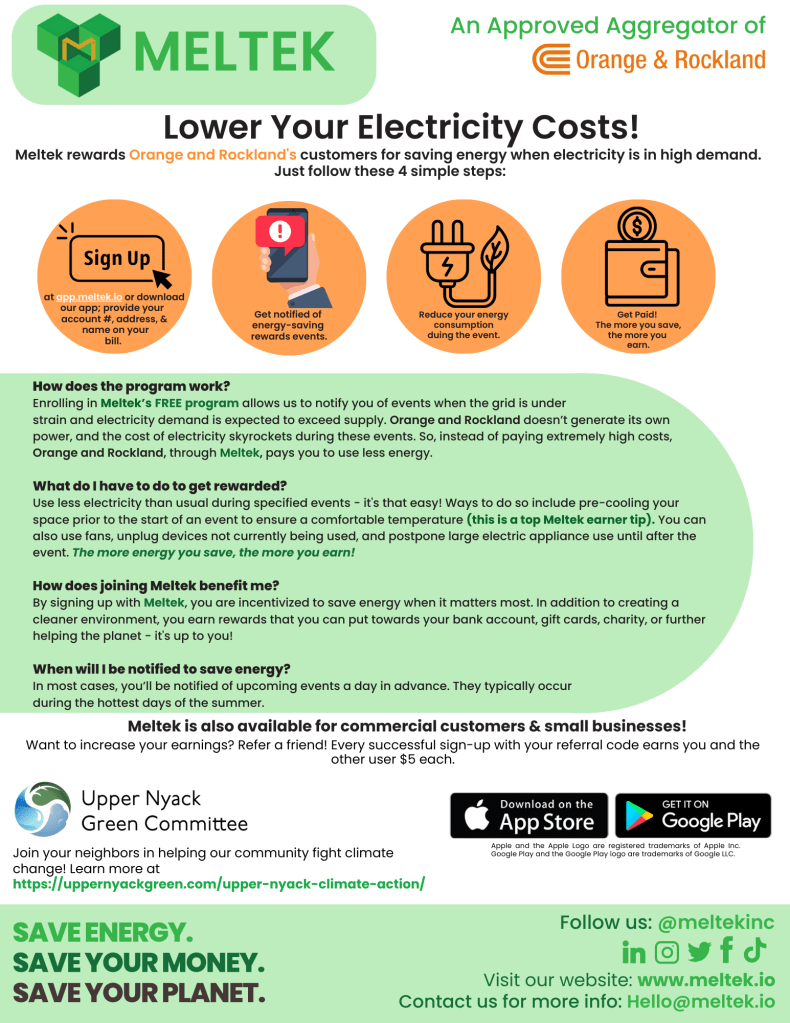
The Upper Nyack Green Committee is promoting a new program to lower your energy use, reduce your carbon footprint – and save you money.  This program, called Meltek, is entirely free and is authorized through Orange & Rockland.

Meltek can help you reduce your energy use at peak times on hot summer days.  By voluntarily shifting our energy use to off peak hours – and by becoming more efficient, we can reduce the use of the dirtiest power plants on peak hot days.  

Meltek alerts participants ahead of time to peak electricity demand days – and gives you ways to reduce your energy use — and shift it to off peak.  You get paid for reducing your energy use, or you can donate the savings to charity, to plant trees, or to buy carbon offset credits.  All of this is voluntary.

When we do this as a community, we can truly make a difference!

You can learn more at www.meltek.io and sign up or download the Meltek app at app.meltek.io.

Categories
Call to Action Educational Event

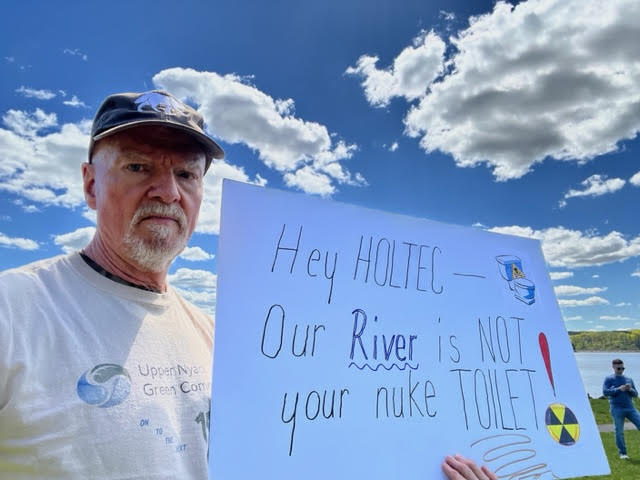
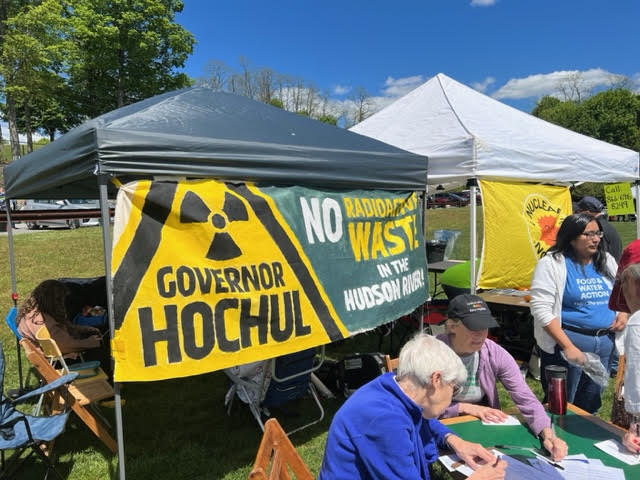
Green Committee Participates in Rally to Protest Radioactive Water Dump in the Hudson

The Green Committee took part in the “Rally to Save the River” in Cortlandt on May 6. The rally was held to protest against plans of Holtec International “to discharge 1 million gallons of radioactive water into the Hudson River as part of its decommissioning process,” as noted by the Cortlandt Town Supervisor. In April, Holtec agreed to suspend, but not cancel, its plans. As stated by Food & Water watch, the waste “contains toxic contaminants, including tritium. Exposure to this radioactive isotope is linked to cancer, miscarriages, genetic defects and other adverse health effects. There is no safe dose of radiation and its harmful impacts are cumulative.” Holtec argues that the plant has carried out similar wastewater discharges since the 1960s, but, as Riverkeeper notes, “Just because these discharges have occurred for more than 40 years does not mean they are the best disposal method…The ideal situation is zero radiation entering the Hudson River.”

The Green Committee participated in the public comment period, noting that science has not made significant enough advances to credibly safely dispose of or alleviate the dangers of tritium. To dilute tritium by dumping it in with water from the Hudson river, subject to the forces of ebb and flow, would offer no guarantees as to where remnants wind up, how much marine or wildlife might be affected, how human consumption would be impacted, and over how long a time period these effects might last.

 The Green Committee also signed the petition to the governor to sign the Save the Hudson Bill and to implement a two-year moratorium on dumping or moving nuclear waste. Instead, the bill calls for storing radioactive tritium and continually monitoring storage casks.

Categories
Educational Newsletter

Celebrating Neurodiversity and our Nature  on Autism Acceptance Month 


by Suzanne Buchauer

While hiking the Long Path along the historical Hudson River yesterday, it dawned on me just how many autistic/neurodiverse individuals ended up contributing to our efforts to interpret, understand, and discover our world. The neurodiverse people below have helped broadened our collective knowledge, understanding, and wisdom about our natural world. It is a common trait of autistic individuals to be extremely focused, detail-oriented, and passionate about their particular topic of interest. Those are only a few of the talents, gifts and strengths of being neurodiverse.

Let’s take a moment to remember, to contemplate and celebrate neurodiverse individuals, whose love of animals and our natural world has made huge impacts on our lives.

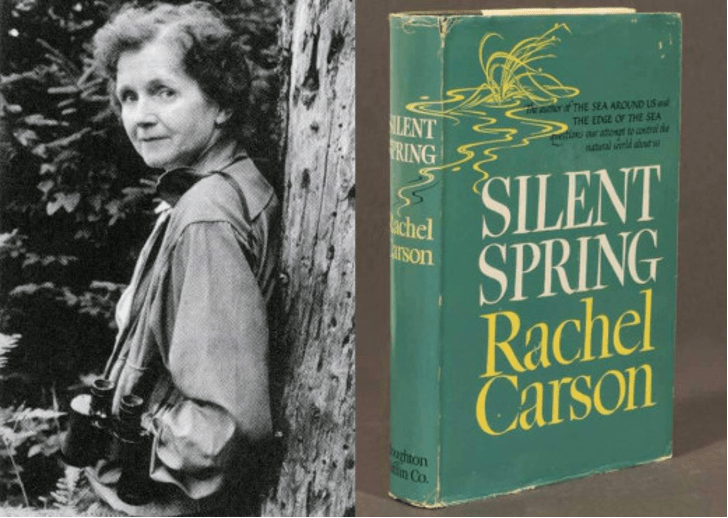
Rachel CarsonBiologist, writer and ecologist

Carson’s passionate concern in Silent Spring is with the future of the planet and all life on Earth. She calls for humans to act responsibly, carefully, and as stewards of the living earth.  Michael Fitzgerald of Trinity College in Dublin explored her life and personality with the traits and characteristics of what we call being on the autistic spectrum and wrote a subsequent research paper called:  Rachel Carson was on the Autism SpectrumYou can read the paper here.

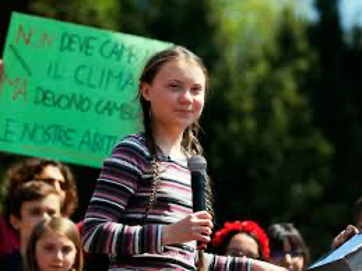
Greta Thunberg—Swedish climate activist

Greta has captured the hearts of many in the world.  She is passionate about getting the word out about climate change.  Greta is particularly well known for challenging world leaders to take immediate action for climate change mitigation.

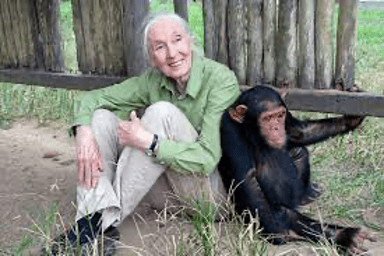
Jane Goodall—Primatologist and Anthropologist

Jane Goodall was the first person to observe chimpanzees using tools—a trait that was thought to be uniquely human.  The discovery helped shape the way we see animals and ourselves.

See this excerpt from Temple Grandin (Chapter 8: “Wildlife”) which discusses Jane Goodall’s work and the connection with strength based autistic traits.

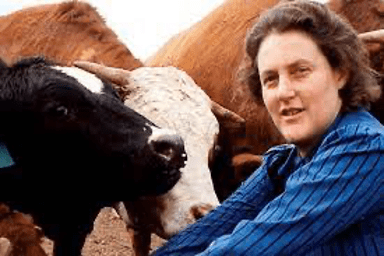
Temple GrandinProfessor of Animal Science at Colorado State University

She is a consultant for livestock handling equipment design and animal welfare.

Temple Grandin has contributed so much to our understanding of ourselves, animals and clearly explains how many neurodiverse people see the world.  Her most recent book is called Visual Thinking, and is a must read for anybody who wants to understand themselves or others who are neurodiverse. Reading all of her books is super helpful as she compiles research to help us understand ourselves and the natural world.  Here are my personal picks for all people, though they are children’s books.  All children can benefit from these books about getting out into the real world and doing things with their hands:

Calling All Minds—How to Think and Create like an Inventor, by Temple Grandin

The Outside Scientist—The Wonder of Observing the Natural World, by Temple Grandin

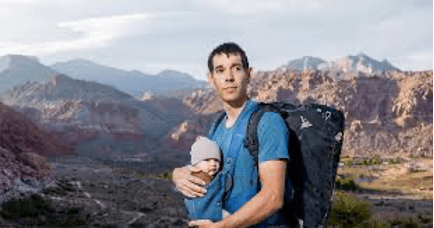
Alex HonnoldRock climber and solar energy advocate

Honnold admits to being “somewhere on the spectrum”.  He has a love for climbing, the outdoors and for adventure.  He is now a father and has stepped back from dangerous solo climbing for his family.  He has founded the Honnold Foundation, which is a non-profit to reduce environmental impact and address inequality by supporting solar energy initiatives worldwide.

Dara McAnulty—Author and iWill ambassador

McAnulty works with young people and working to save our environment.  He has experience with biodiversity, wildlife and the landscape of Fermanagh in Northern Ireland.

Daryl Hannah—Actress and Environmental Activist

Hannah is a board member of the environmental Media Association.  She co-founded Biodiesel Alliance to advocate for sustainable biodiesel practices and coordinate communication for sustainable energy future that benefits all sectors of our society.

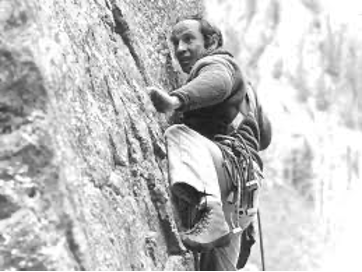
Yvon ChouinardRock climber, business leader, and philanthropist

Yvon is an  “alternative self-made businessman (who) taught us inspiring lessons on how to perceive the world and our lives as an ephemeral journey. We are only guests on a temporary planet.”  Yvon was reported to be a “loner and a geek” as a child. He found climbing by scrambling on rocks.  He is well known as an inventor for innovative gear developments for climbers, like ice axes, crampons, etc.  He founded Patagonia and has recently made history by donating 98 percent of Patagonia’s common shares, to a newly established nonprofit organisation, which will be the recipient of all company profits and be used in funds to combat climate change. 

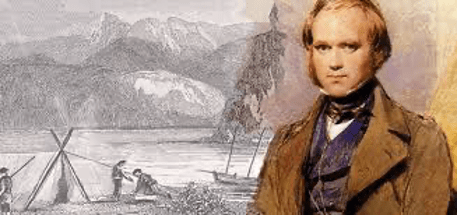
Charles Darwin—Naturalist, geologist and biologist

Darwin was an intrepid explorer and accomplished naturalist.  His love of  nature and his ability to explain his observations and findings, such as adaptation and natural selection was key to our understanding of modern science and our view of the natural world today and ever thereafter.

These are just a few of the people who are very likely humans on the spectrum and/or otherwise neurodiverse, and who love nature.  We need neurodiversity and the  innovative thinkers and doers who get out there and make invent, explore, and do.  Thankfully, many big donors and doers love our environment, so with the increase in neurodiversity, there is a chance for us and our earth! 

Being neurodiverse is very cool and in, useful and empowering; in the words of Temple Grandin:

“What would happen if the autism gene was eliminated from the gene pool?” You would have a bunch of people standing around in a cave, chatting and socialising and not getting anything done.”

Temple Grandin

May all thinking types be celebrated, appreciated and embraced, this month and every month.  Happy exploring everybody!

Suzanne Buchauer is a Davis Dyslexia Correction Facilitator and Autism Approach Facilitator living and working in Upper Nyack, New York. Visit: www.dyslexia-works.com.

Categories
Educational Newsletter

Earthing: The Surprising Benefits of Physically Connecting with the Earth

by Suzanne Buchauer

While living in Australia, the land of barefoot walking, I learned some fascinating and surprising things about going barefoot and touching the earth, directly.  Yes, it feels so invigorating to wiggle one’s toes through the grass, and is so freeing to stretch out, on a rock, after bathing in a river; skin touching a  smooth, warm, rock surface—yet there is more to going barefoot and lying on a rock than just fun—it is called “earthing”. 

What in the world is earthing? 

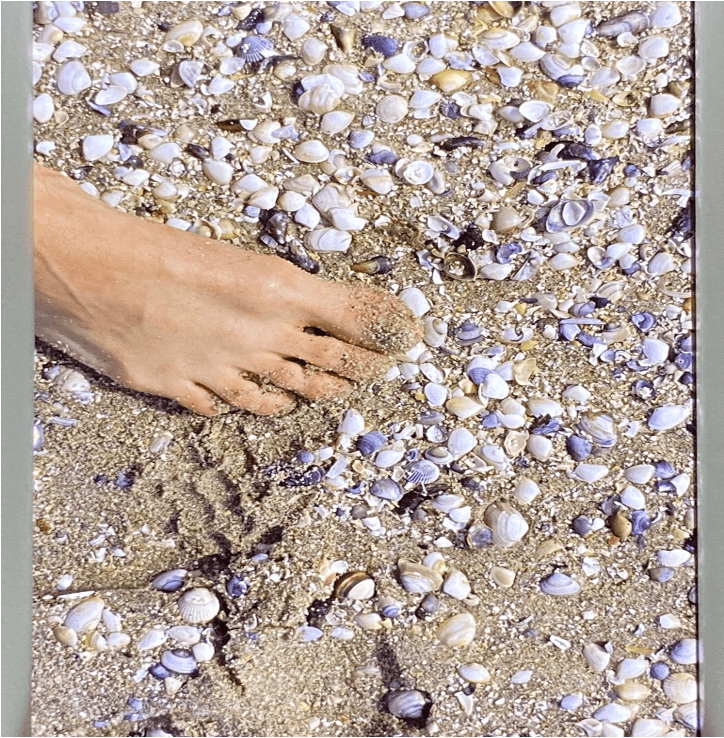
Earthing is when you directly or indirectly (with help) connect your body, to the Earth’s natural healing energies.  This can be done by: going barefoot, swimming in a natural lake, stretching out on the lawn in shorts, or on a sandy beach, sitting on a log or stone, with shorts on, so that the skin touches the earth object’s surface.  It is the direct contact with earth; that is key!

This is not a new concept, of course. Thousands of years ago, “earthing” was recognised in Chinese records, which focused on “Earth Qi”.  Other indigenous cultures throughout time have demonstrated that they have had a very easy and connected relationship with the earth’s healing energies.  Dressing minimally, when possible, and spending time directly touching the earth’s surface was an easy way to gather the earth’s energy into people’s bodies, in the past and now.

For starts, it can be done anywhere you can find a bit of earth; or, it can be done inside your home, with the use of passive earthing contact technology, for sale through various vendors.  Earthing can be a free way to heal many conditions.  And, amazingly, you can even choose to purchase items to assist you to do it more often, indoors, to suit your personal condition or needs.

How can I easily connect to the earth?

You can connect directly to the earth with your body, or buy helping items, like blankets, copper inserted sandals, arm pads for desks. . .

How does it help us humans?

Connecting the human body with the Earth’s electric charge significantly stabilizes our human physiology at the deepest levels.  Both qualitative and quantitative research studies document the effectiveness to our human body and mind.  See the link below for research and discussion of benefits, including a visual mind map. The benefits are holistic, including: calming the mind, lowering stress levels, calming the heart, reducing muscle pain, enhancing immune response to speed wound healing, slowing free radical damage associated with aging, enhancing energy, reducing painful joint inflammation, balancing bone calcium, regulating hormones, calming digestion, improving blood oxygen, enhancing cell function, and improving circulation.  To see the research on these benefits, check out the article linked here.

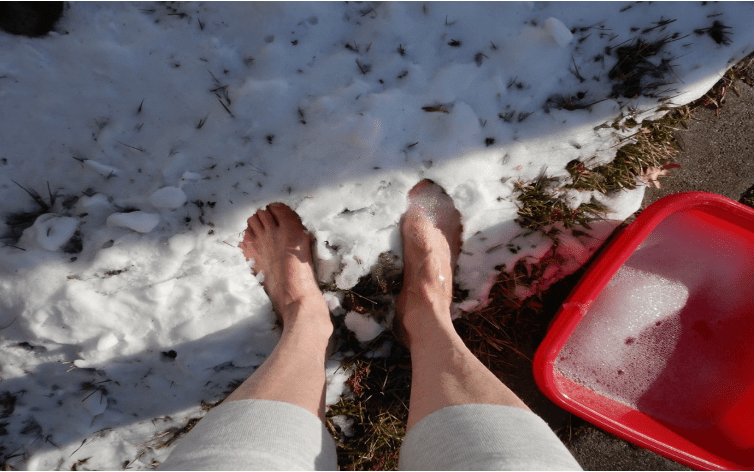
Earthing in Nyack, after the late January snow storm, 2022.

How can I actually do earthing if I do not like to be barefoot, it is cold, or I cannot go outside due to health or work circumstances?

There are products on the market to help with most human conditions. Yes, earthing can be done outside at any time, and inside with the assistance of: grounding blankets for day or night time passive earthing connection; mats for your bare arms, at your computer table; grounding mats for your feet, while sitting inside at your desk or table; sandals with copper conductive inserts, to connect with the earth, while walking outside;  and more. 

Nature path project, for the whole family, or for community locations

A nature path for yourself, your family, or your community is easy to make and fun for all.  You can clear a path and make it around 15 feet or as long as you like.  Divide the path up into segments by putting some stones or non-treated wood branches along the edge of the path and across the path every three feet, or so.  You can make this path circular or straight.  Once you have around five or six segments all cleared and boxed off, you are ready to begin collecting various conducting earth objects.  You can collect and then put different natural items inside each section, which work as conductors to the earth below. Here are some ideas for the different segments in a nature path:

  • grass and moss
  • soft pine cones
  • smooth stones or smooth gravel
  • coarse sand
  • cedar or other bark
  • pine needles
  • mud
Deep mud earthing on a prepared and safe nature trail, which is a half mile long and has various earthing segments.

What about my freshly mopped floors inside and the mess of going outside, barefoot?

Yes, safeguarding the peace in the house and feeling refreshed can be managed by washing the feet after earthing.  This can be as easy as using a nearby hose and having a towel ready at the entrance to the house afterwards. My personal preference, in all weather, is to provide my family members and myself with a foot-sized basin of warm, sudsy water, using biodegradable soup, of course, with a wash cloth in the basin, to clean the feet. Then, I have various towels at the ready, on the door step, for drying, afterwards.  It is very refreshing and relaxing and keeps the harmony in the house. (No more muddy footprints through the house.)

Whether you decide to do your earthing by stepping outside and kicking off your shoes for a walk or just standing in the yard while on the phone; making a planned nature/earthing path at home or in a local park; or getting some of the inside earthing products; my hope is that you have been inspired to give it a try and find your own creative way of connecting with the healing energies of our earth.

Happy Earthing, to you all.

Suzanne Buchauer

Suzanne Buchauer is a licensed Davis Dyslexia Correction Facilitator and Davis Autism Approach Facilitator, dyslexia-works.com, who lives in Upper Nyack, New York.

Categories
Educational Event

Nyack 2030 Climate Action Plan workshop

The Village of Nyack is hosting a public workshop on March 22 to kick off the Nyack 2030 Climate Action Plan project. Nyack is creating a plan with concrete, ambitious steps we can all take to reduce our greenhouse gas emissions and help our community adapt to climate change impacts.  Upper Nyack and other area residents are invited to attend.